
Wire rope almost never fails without warning. The warning is simply easy to
walk past if you do not know where to look.
Where to look first
Damage is not evenly distributed. Look hardest where the rope works hardest:
- The section that runs over sheaves at the hook heights you use most
- The terminations at both ends — end fittings, wedges, swaged sockets
- Where the rope lands on the drum, especially at the crossover between layers
- The length nearest the hook, which takes shock and rotation
- Anything involved in a known incident — a snatch, a kink, a heat source
What you are looking for
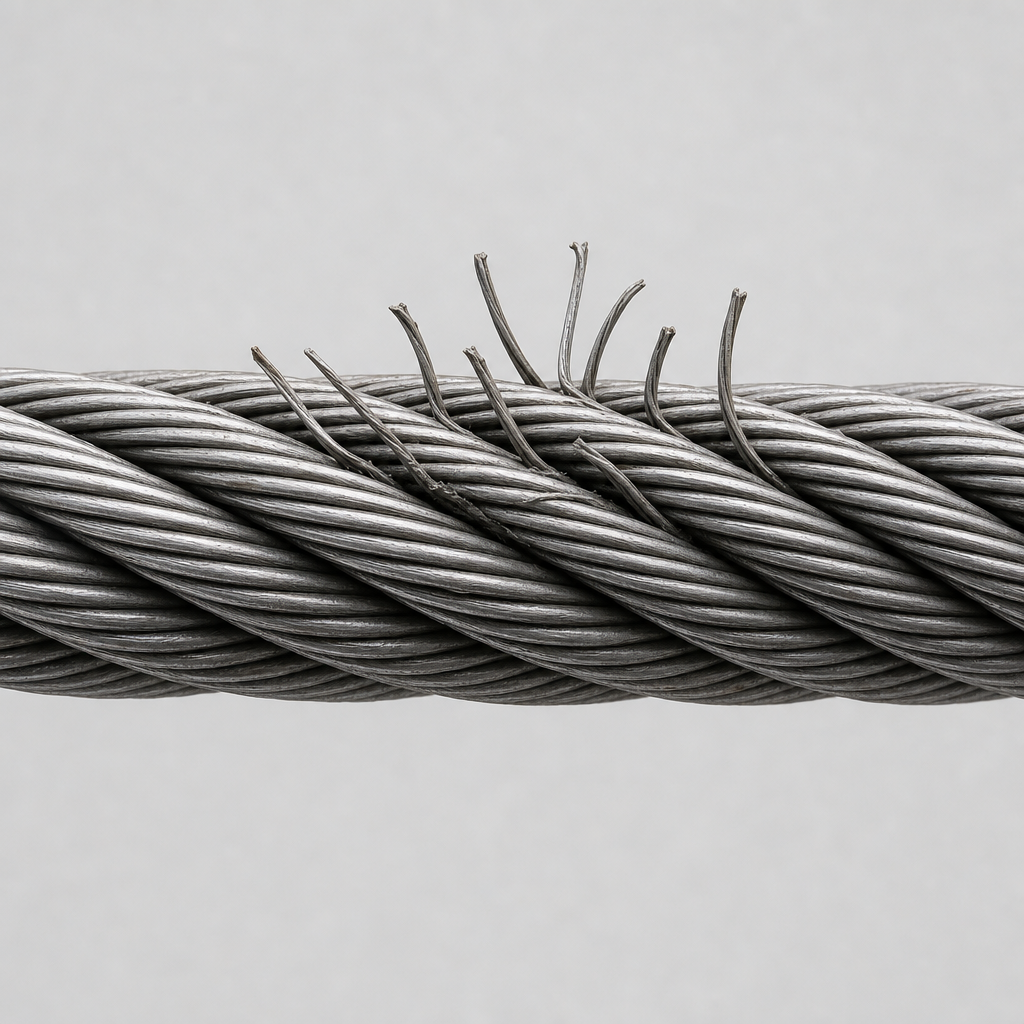
Broken wires. Individual wires that have failed. They often
stand proud like a small splinter. Run a rag or a glove along the rope — it
snags where you cannot see the break. Note where they sit: several breaks
clustered in one place mean something different from scattered ones.
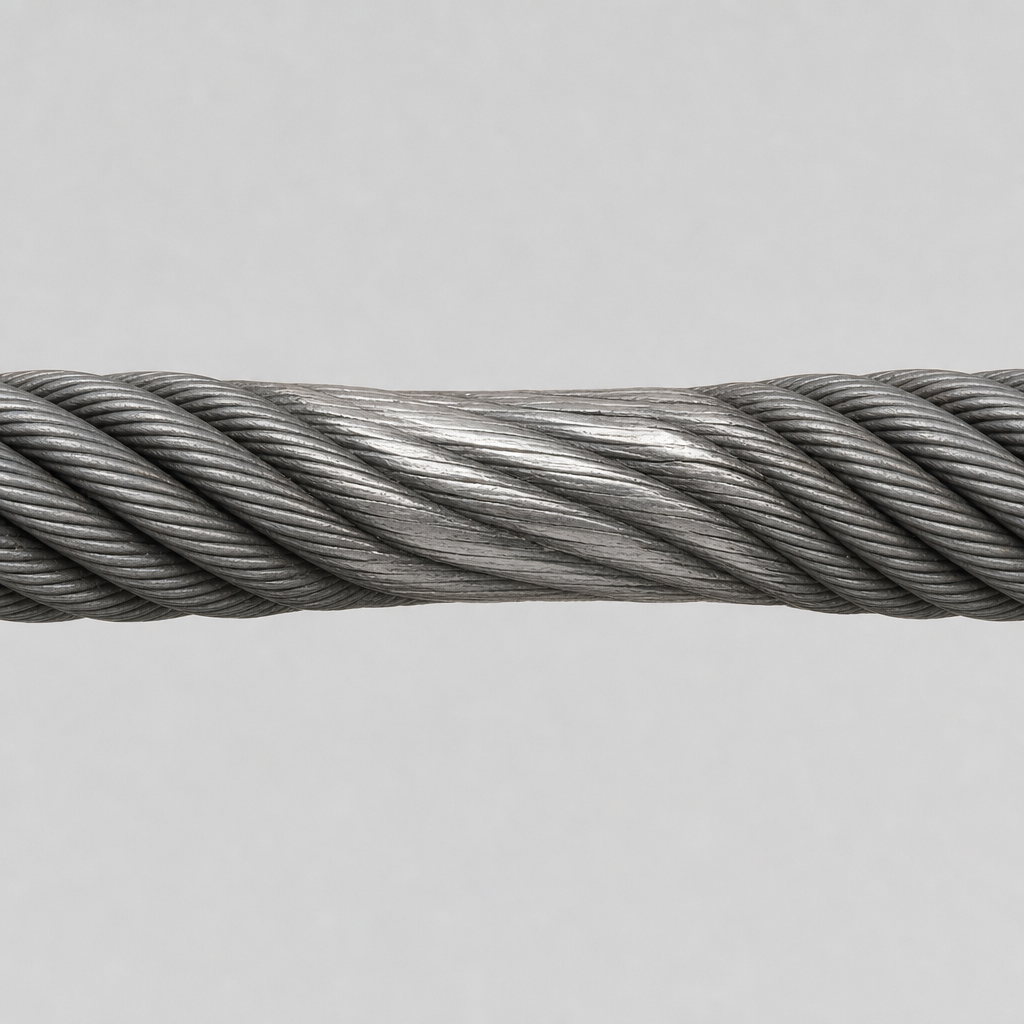
Diameter reduction. The rope thins where it has worn or
where the core has collapsed. Measure with calipers across the same point in two
directions, and compare against a length of rope that does not work.
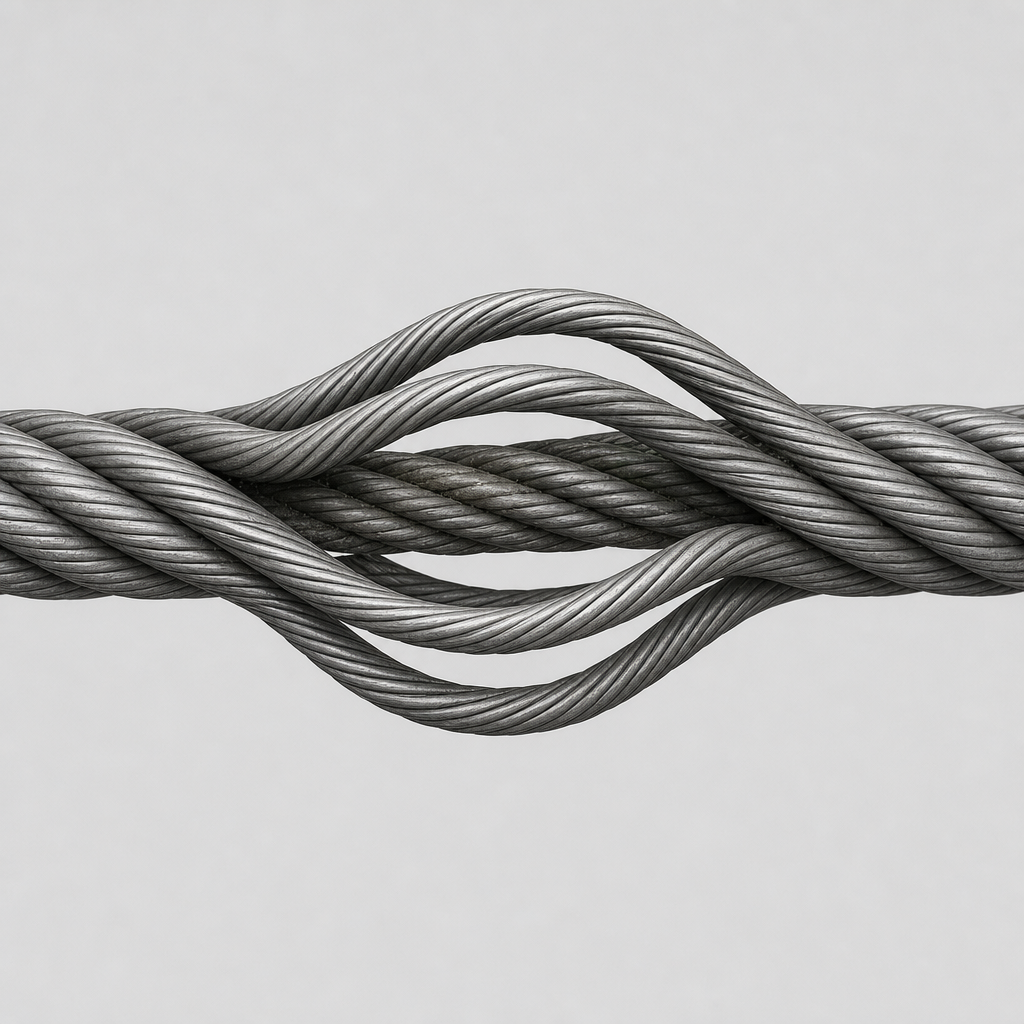
Birdcaging. The rope bulges like a basket because the core
and outer strands no longer travel together. This one is serious.
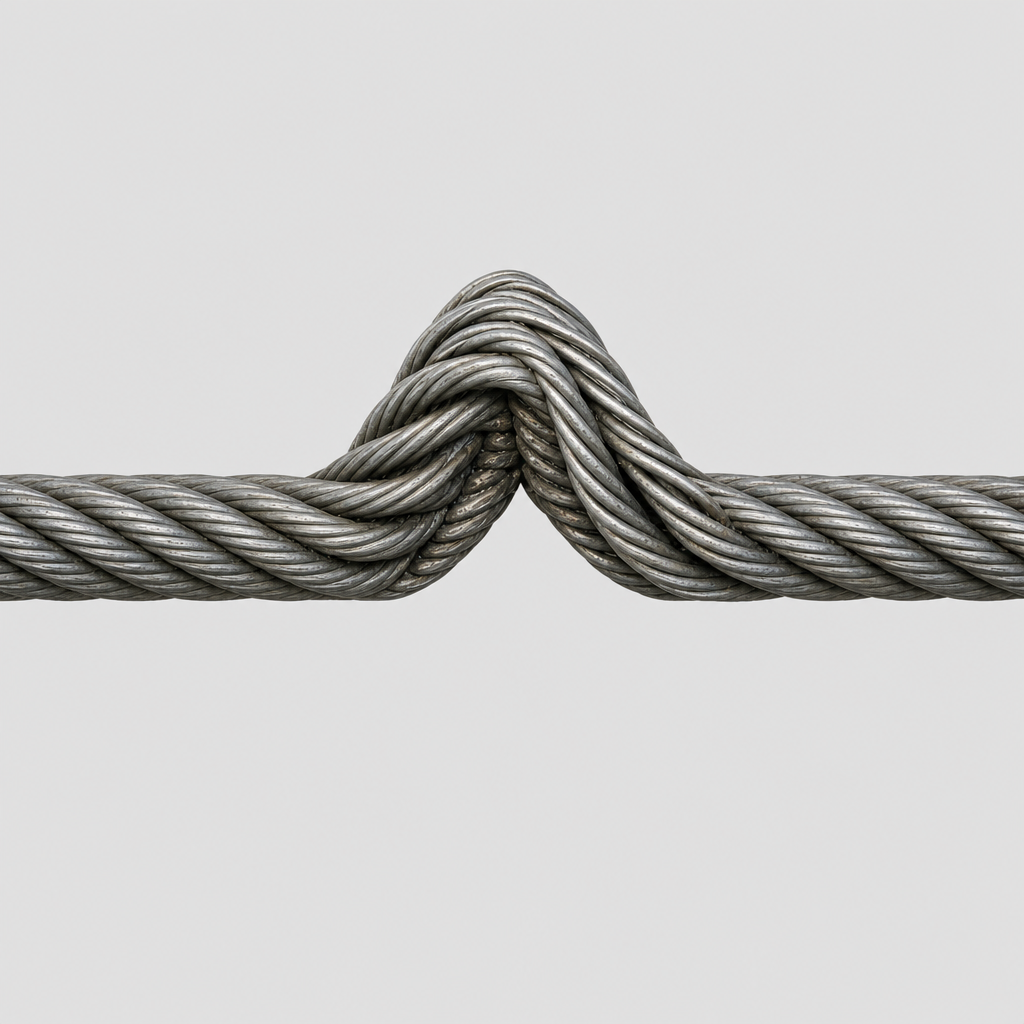
Kinks and deformation. Bends, corkscrewing, flattened
sections, protruding strands. The damage is permanent — a rope that has been
kinked does not recover.
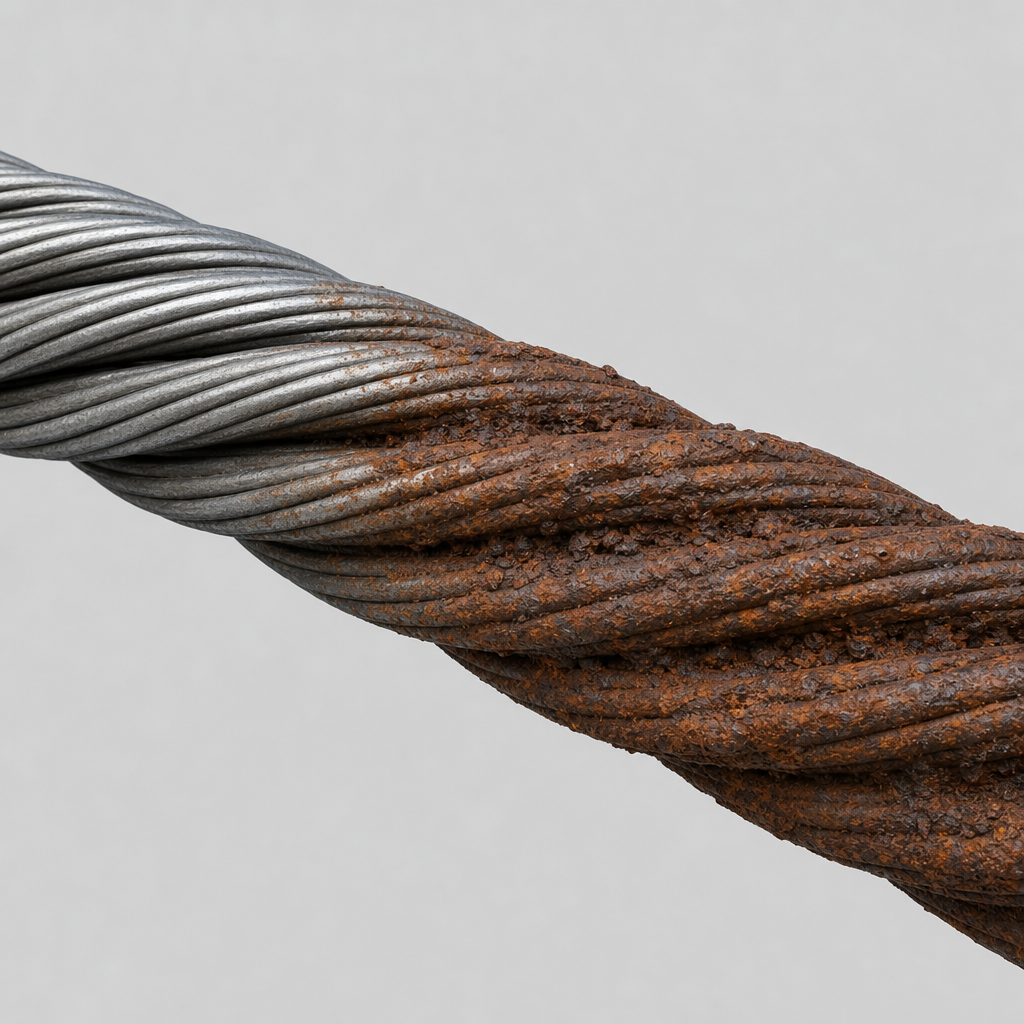
Corrosion. External rust you can see. Internal corrosion is
more dangerous and shows as discolouration, a rope that feels “dry”, or a
diameter that has shrunk without visible wear.
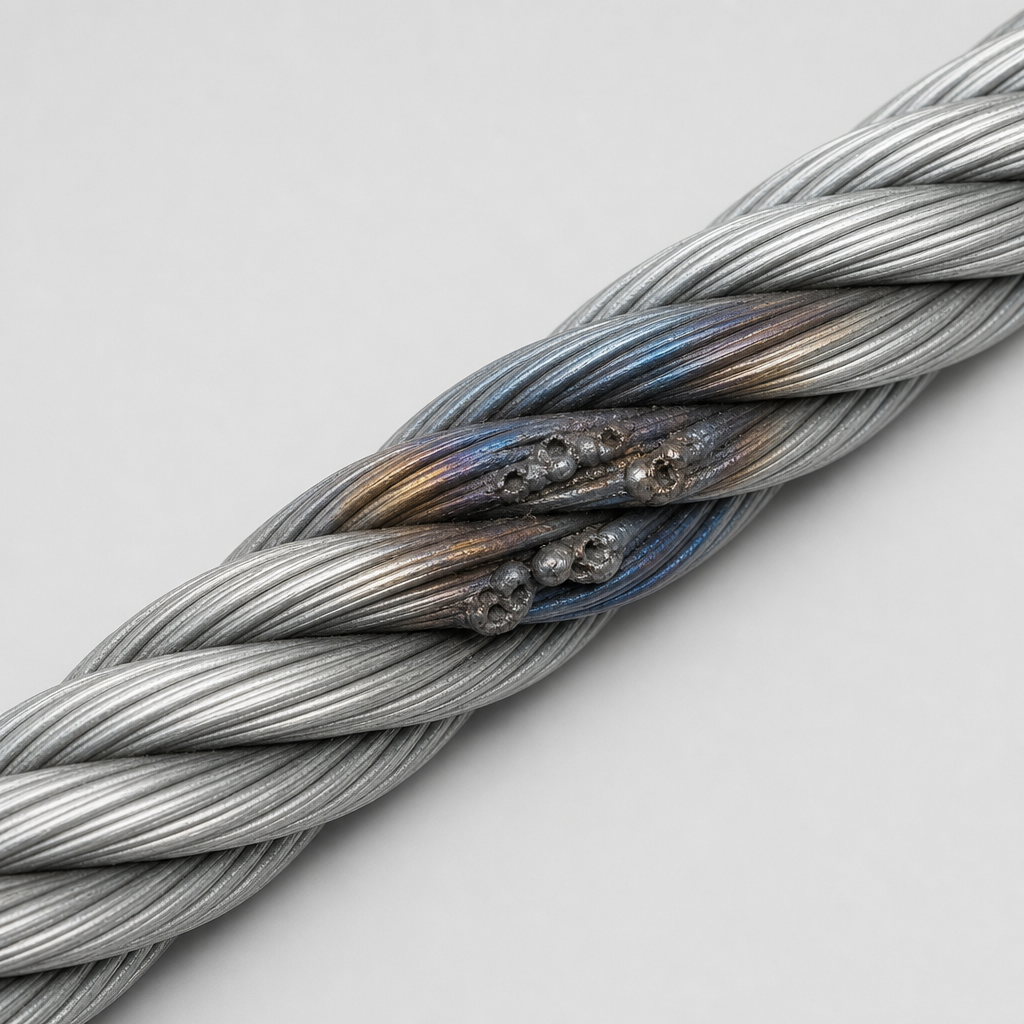
Heat and electrical arcing. Discoloured steel, melt marks,
small craters. The strength can be gone while the rope still looks intact.
How to inspect
Use enough light. Run the rope slowly past a fixed point so you see its whole
length, and rotate it so you see the whole circumference — not just the side
facing you. Wear gloves. Record where on the rope a finding sits, measured from
a fixed reference, so the next inspection can see whether it is developing.
When you find something
How much is too much is not on this page. The discard criteria for your rope
follow from its construction and from the crane’s documentation, and are
assessed by sakkyndig kontroll. Your job is to find it, record it and report it
— not to decide whether it is acceptable.
If in doubt, the crane stops. A rope that “will surely last a few more days”
is a judgement nobody asked you to make.
No thresholds here — by design. Discard criteria, torque values, lubricant types and intervals are specific to your machine and your equipment. They are in the manufacturer's documentation, on the equipment certificate, and in the report from sakkyndig kontroll. This page tells you what to look at and what a fault looks like — it does not tell you when something is condemned. If a check leaves you unsure, the equipment stays out of use until someone competent has seen it.