
The hook is the part of the crane easiest to look at, and therefore the part
easiest to stop looking at.
The safety catch
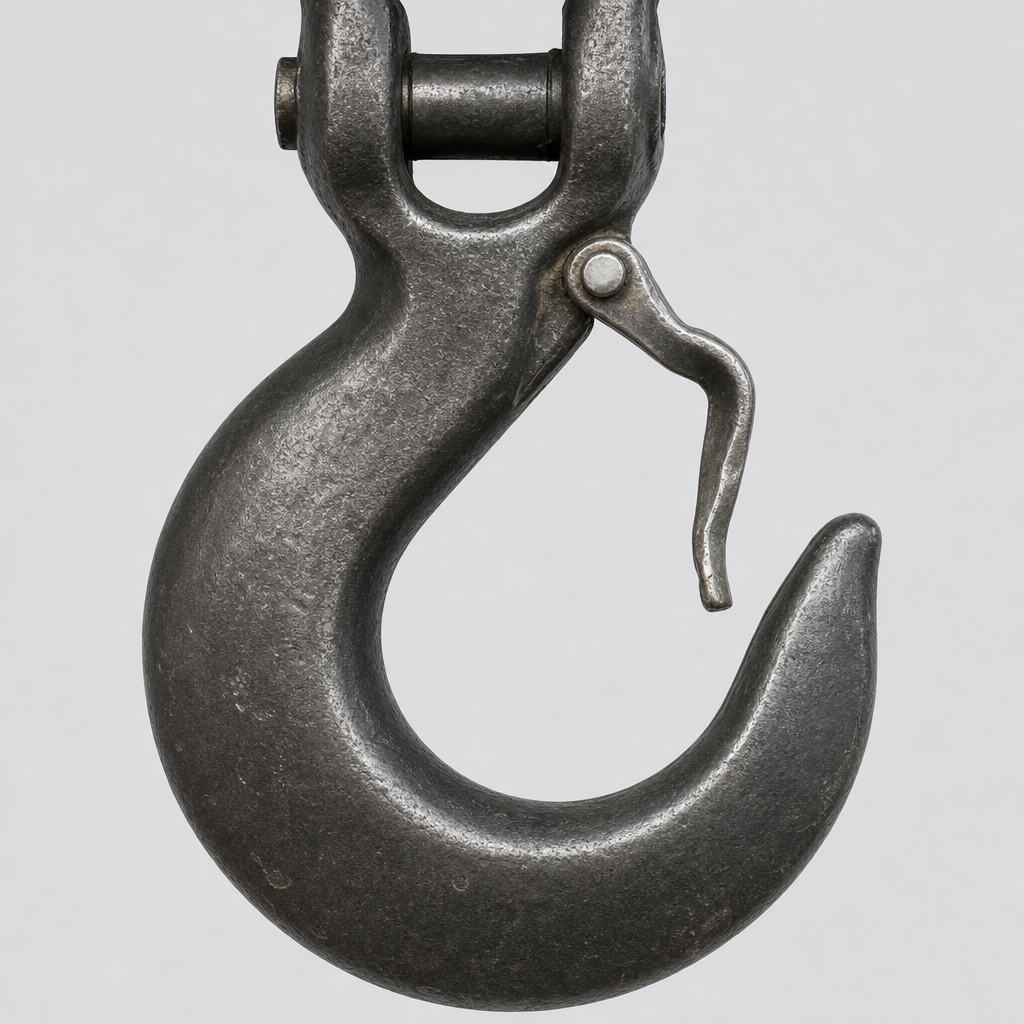
It must be present, it must spring back on its own, and it must close fully
against the hook tip. A catch that sits half open is not a small fault — it is
the one thing stopping the sling from jumping off.
Throat opening
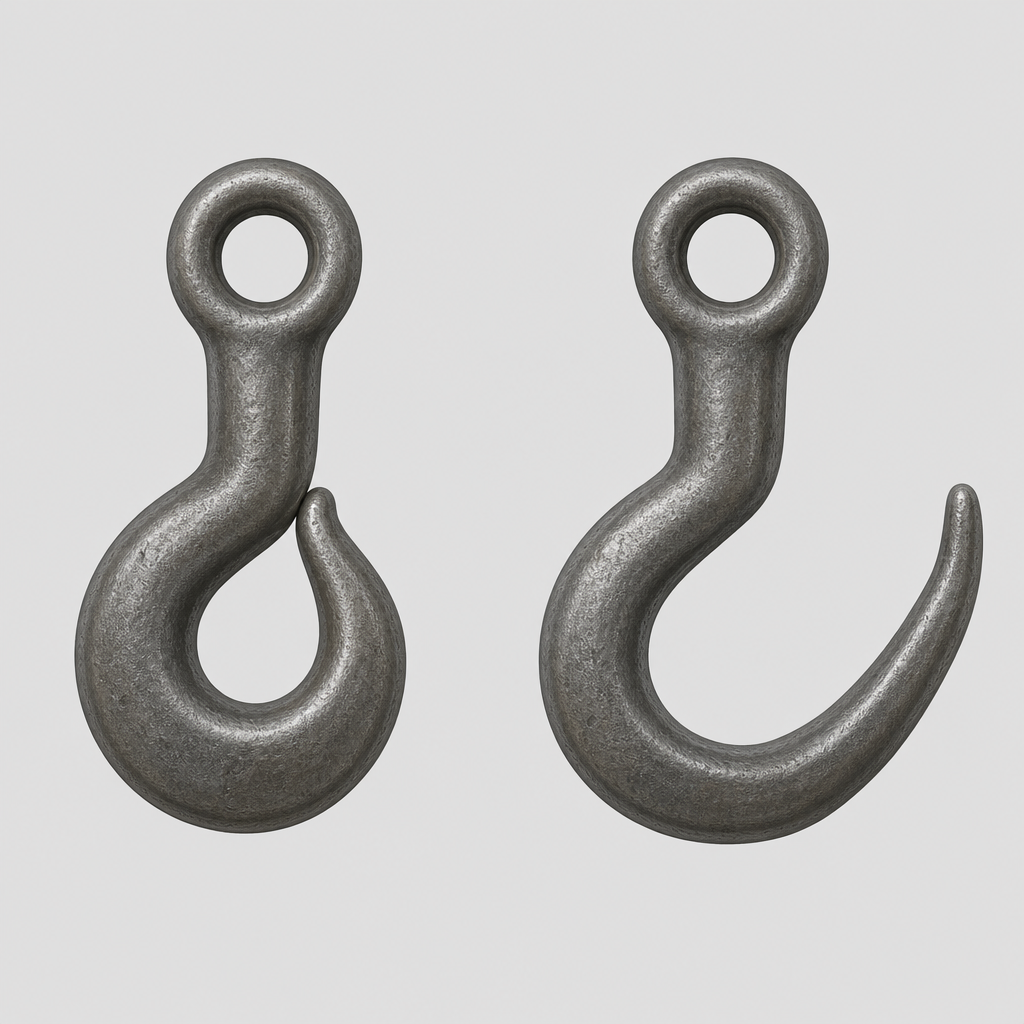
A hook that has been overloaded opens up. It happens slowly and is hard to
see by eye alone. That is why hooks carry measuring marks, and why the opening
is measured against the documented reference for that specific hook — not
against how it “usually looks”.
Wear and damage
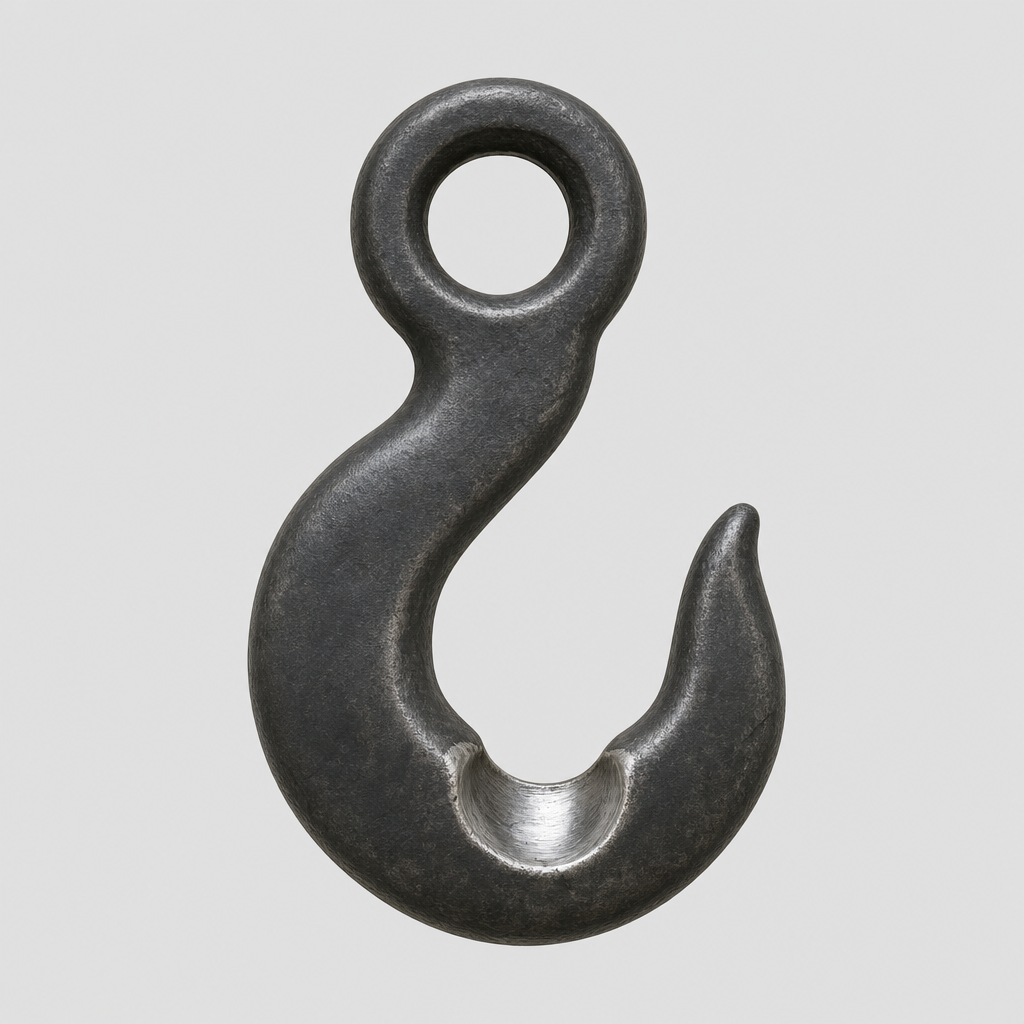
- Wear in the saddle, where the load sits. Often polished bright and
measurably thinner - Nicks, gouges and cuts — sharp nicks especially, which are where a crack starts
- Cracks, most often in the saddle or at the transition to the shank
- Twist. Sight along the hook: the plane and the tip should lie true
- That the hook rotates freely where it should, and that the bearing and nut are secured
- Heat damage, weld spatter, any sign that someone has welded on the hook
Two things that are never done
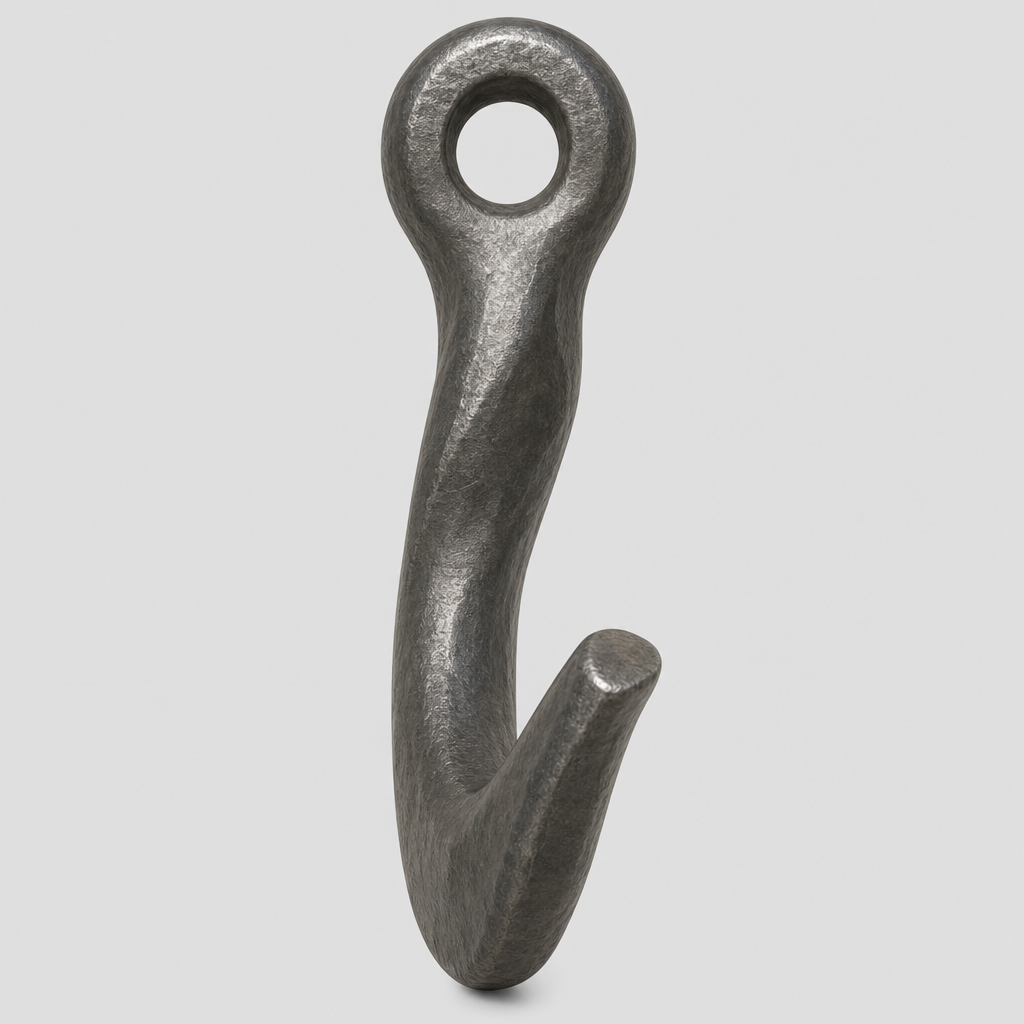
A hook is not straightened. Heating and bending a deformed
hook back destroys the material permanently, however right it looks afterwards.
Nothing is welded to a hook. Not to attach something, and not
to fill a gouge.
A damaged hook is taken out of service and replaced.
Limits
How much opening or wear is too much is in the hook’s documentation and is
assessed at sakkyndig kontroll. See also the
lifting gear reference for hooks on
the gear side.
No thresholds here — by design. Discard criteria, torque values, lubricant types and intervals are specific to your machine and your equipment. They are in the manufacturer's documentation, on the equipment certificate, and in the report from sakkyndig kontroll. This page tells you what to look at and what a fault looks like — it does not tell you when something is condemned. If a check leaves you unsure, the equipment stays out of use until someone competent has seen it.