
Bolted connections hold the crane together. They rarely fail one at a time —
they fail because one loosened and its neighbour got more to carry.
Where to look
- Joints between tower sections
- The connection to foundation or ballast
- The slew ring — above and below
- Jib sections and the anchorage of jib ties
- Counterweight and its mountings
- Anything dismantled and reassembled since last time, wherever it is
Signs something has moved
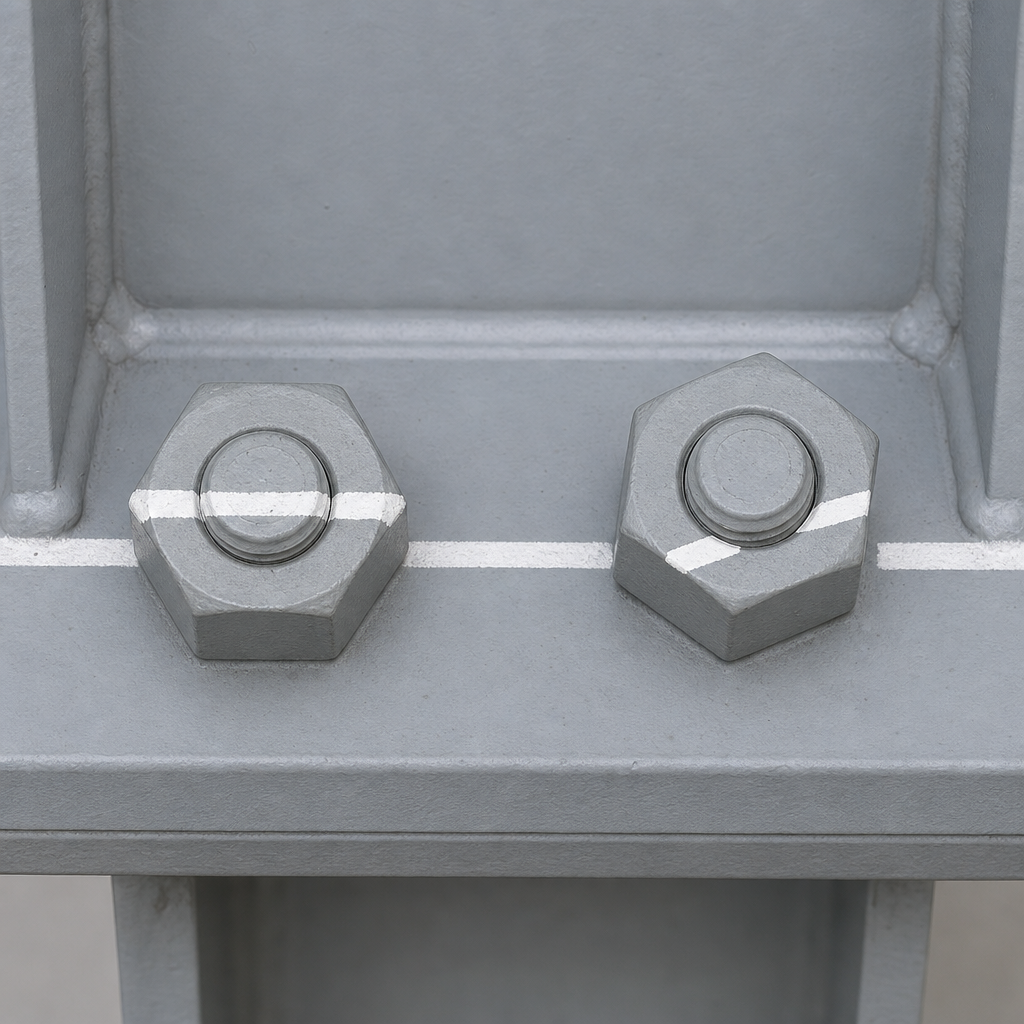
The witness mark. Many connections are marked with a line
across nut and flange after tightening. A line that no longer lines up is the
clearest signal you will get — and the easiest to spot from a distance.
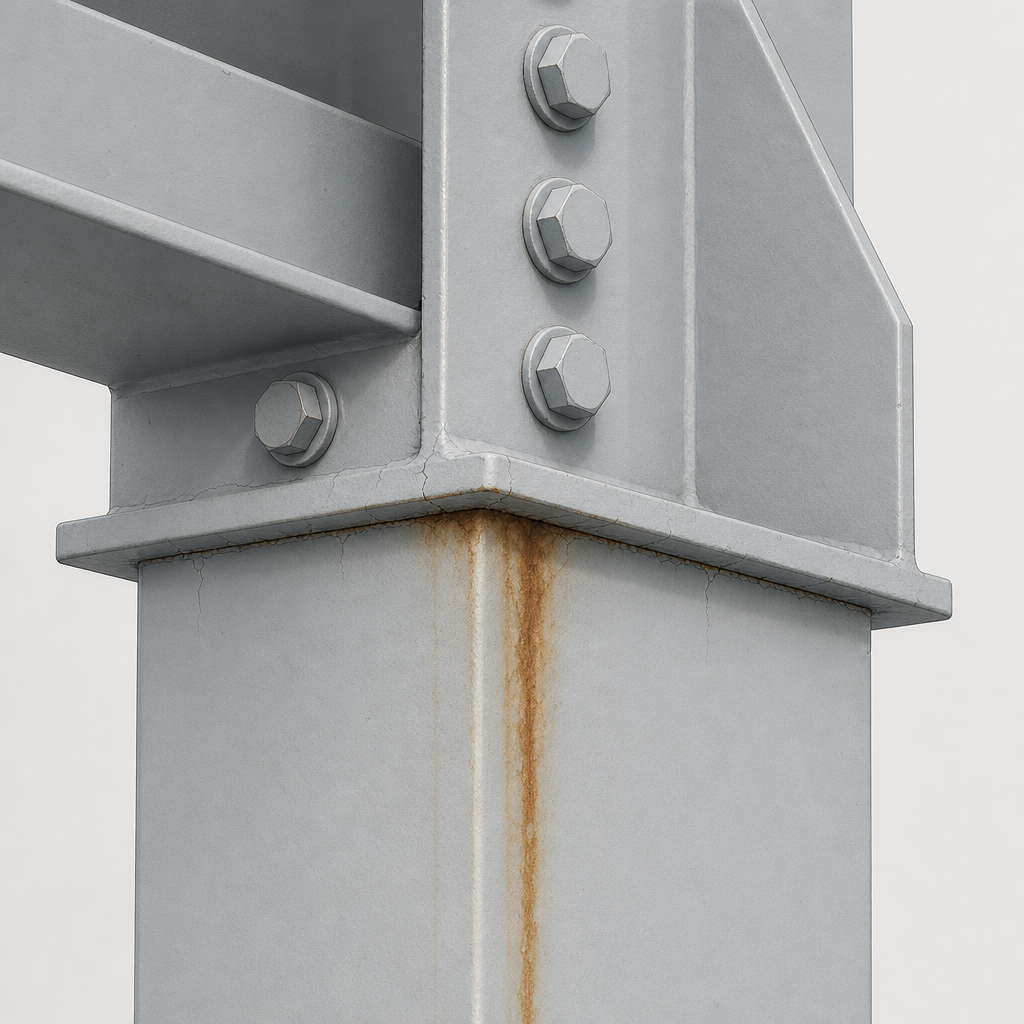
Rust weeping. A thin rust-coloured streak bleeding out of a
joint usually means movement.
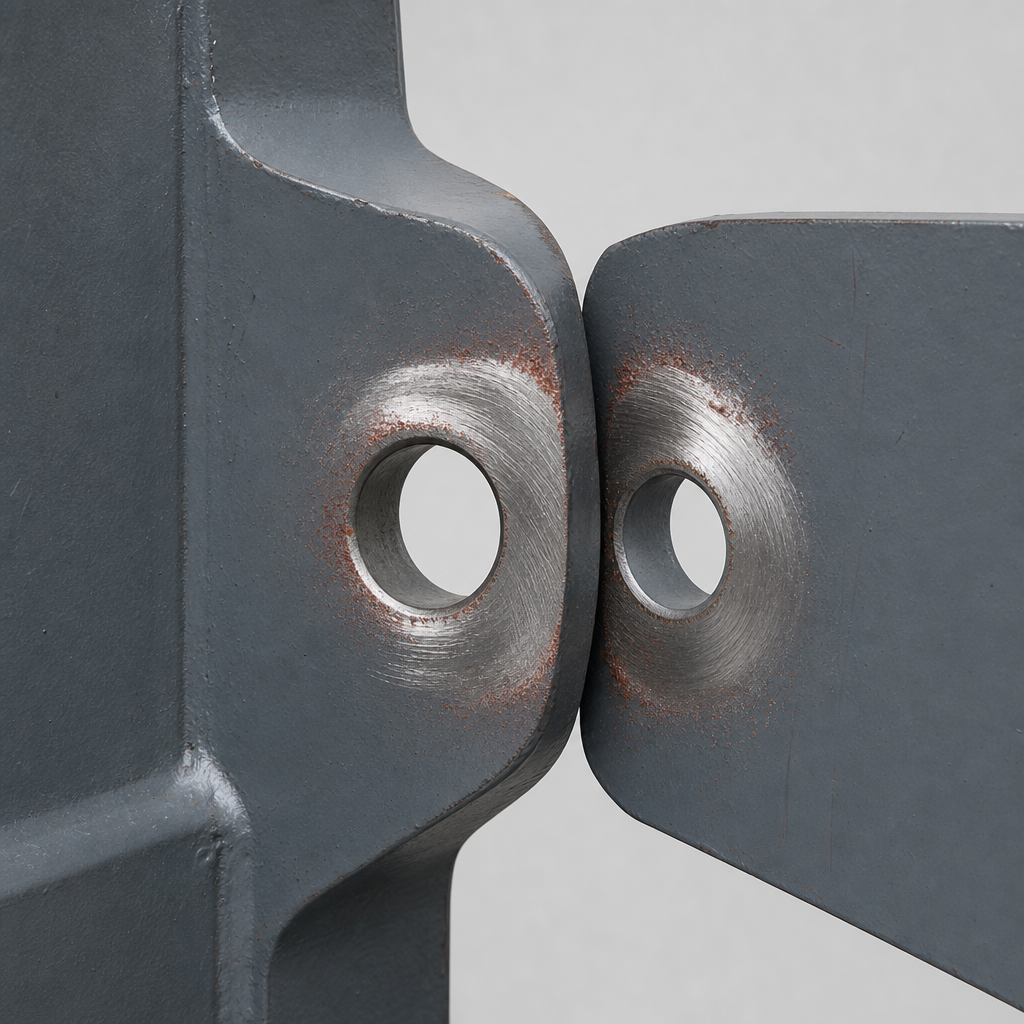
Polished surfaces. Bright worn metal around a bolt or between
two plates means the parts have been working against each other.
Cracked paint in a ring around a bolt head.
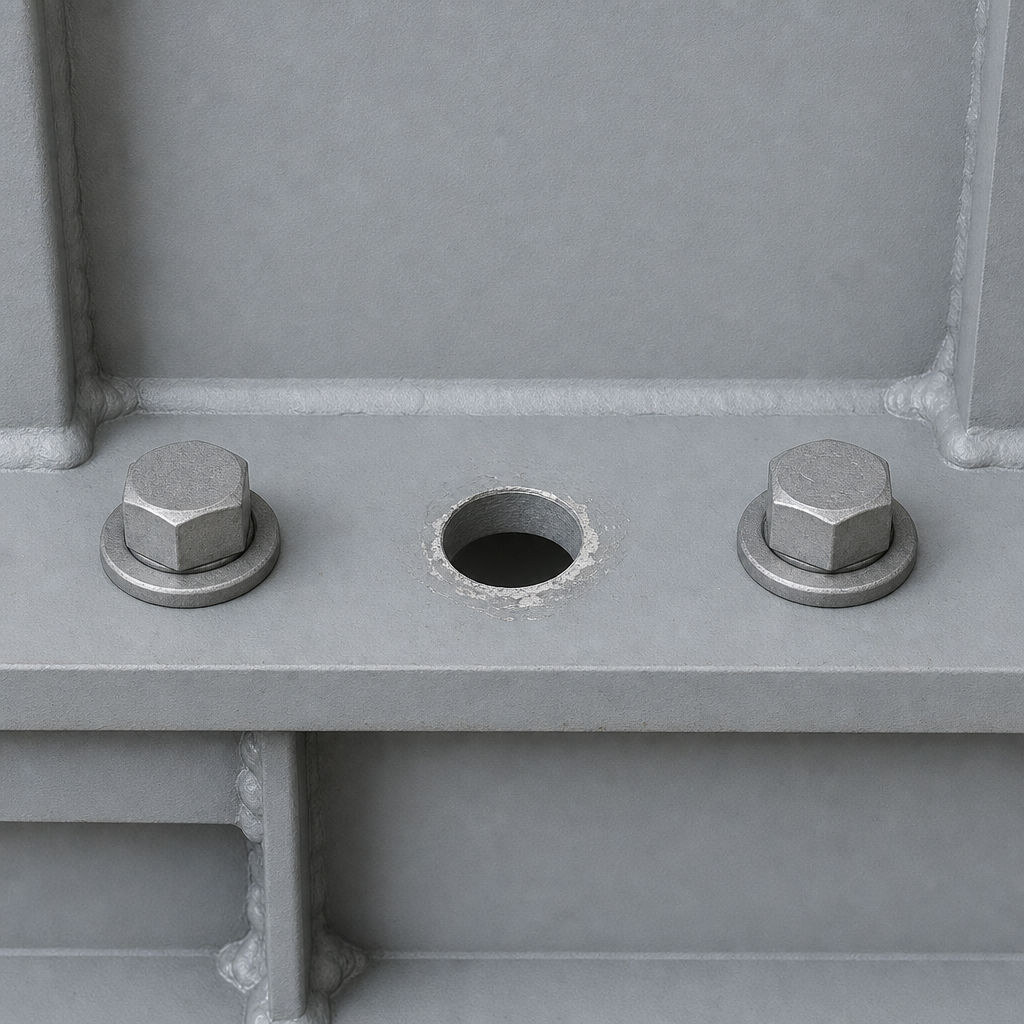
Missing or damaged parts. Absent bolts, missing washers,
split pins that have fallen out, stretched threads.
And noise. A joint that clicks or bangs as the crane slews or changes
direction is telling you something worth investigating.
Who tightens them
Not you, unless you have been assigned to it with the right tools and the
right values. Torque, sequence, and whether a bolt should be replaced rather
than re-tightened are all in the crane’s manual and are structurally critical.
A bolt tightened “hard enough” has not been checked.
Many high-strength bolts are to be replaced rather than reused after
dismantling. The documentation decides that, not how the bolt looks.
After erection and climbing
Bolt inspection belongs to every occasion the crane has been erected, climbed
or dismantled. See
sakkyndig kontroll
on inspection at erection.
No thresholds here — by design. Discard criteria, torque values, lubricant types and intervals are specific to your machine and your equipment. They are in the manufacturer's documentation, on the equipment certificate, and in the report from sakkyndig kontroll. This page tells you what to look at and what a fault looks like — it does not tell you when something is condemned. If a check leaves you unsure, the equipment stays out of use until someone competent has seen it.