
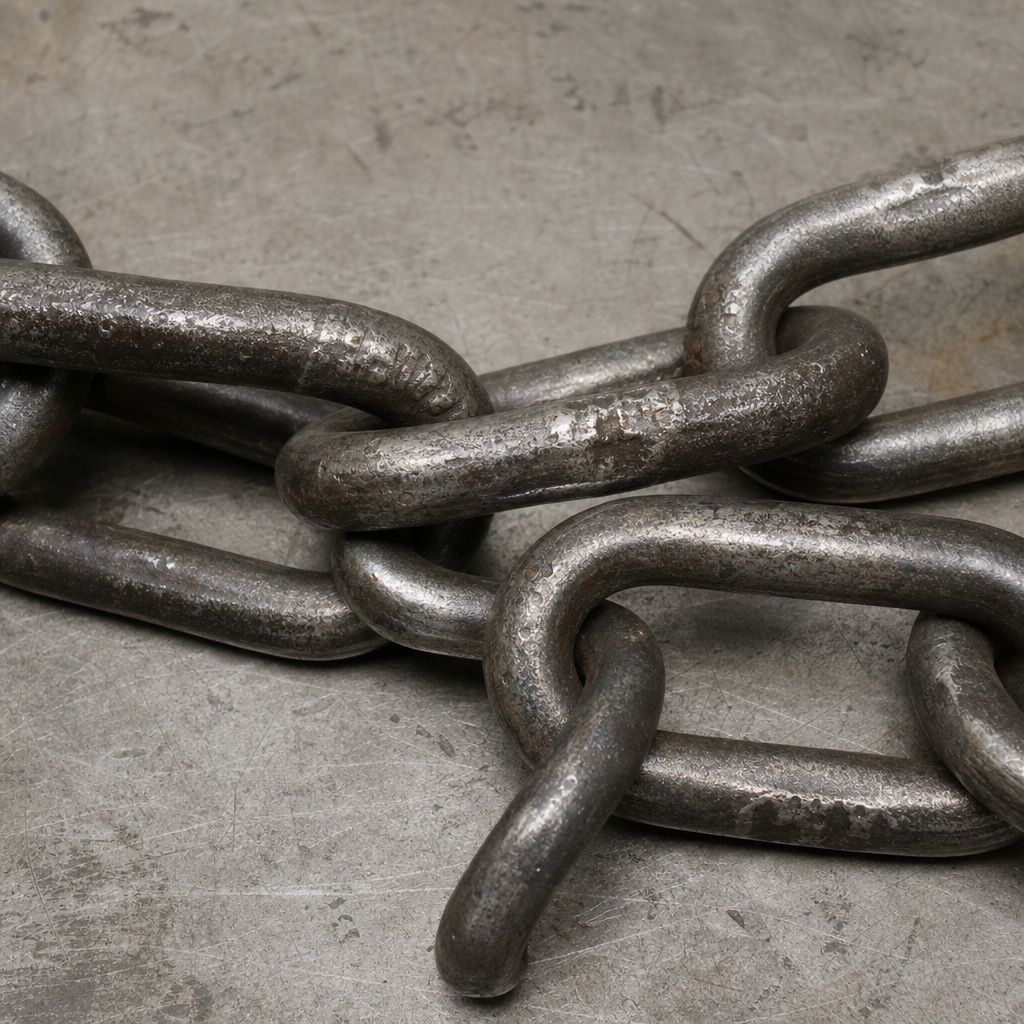
Chain degrades gradually through normal use, so a sling that passed inspection last month can still develop a fault in everyday handling — dragging over rough ground, shock loading, or contact with a sharp edge. A pre-use visual check by the person rigging the load is the first line of defence, backed by periodic thorough inspection carried out by a competent inspection body and documented for the equipment’s service record, consistent with Arbeidstilsynet’s framework for periodic control of lifting equipment.
What to look for on a pre-use check:
- Wear at the bearing surfaces of links, master links and end fittings, visible as flattened or shiny worn patches — wear reduces the load-bearing cross-section.
- Stretch or elongation of the chain — links that look pulled longer or thinner than their neighbours can indicate the chain has been overloaded.
- Nicks, gouges and cuts from contact with sharp edges, which create stress-concentration points.
- Bent, twisted or deformed links, master links, or hooks — chain should hang and articulate freely without kinks.
- Heat damage — discolouration, scaling, or weld spatter from being near cutting or welding operations, which can alter the steel’s properties invisibly.
- Corrosion, particularly pitting, as opposed to light surface surface rust that wipes off.
- Missing, illegible or mismatched identification tag — a sling without a readable WLL tag cannot be safely used regardless of its physical condition.
Any of these findings is reason to remove the sling from service immediately and route it to a competent person for assessment — do not estimate whether damage is “within limits” in the field, since acceptable wear and elongation limits are set by the manufacturer and standard, not by eye. A sling condemned on inspection should be visibly marked or destroyed so it cannot re-enter circulation.
Standarder: EN 818 (short link chain for lifting purposes — safety, multi-part)