
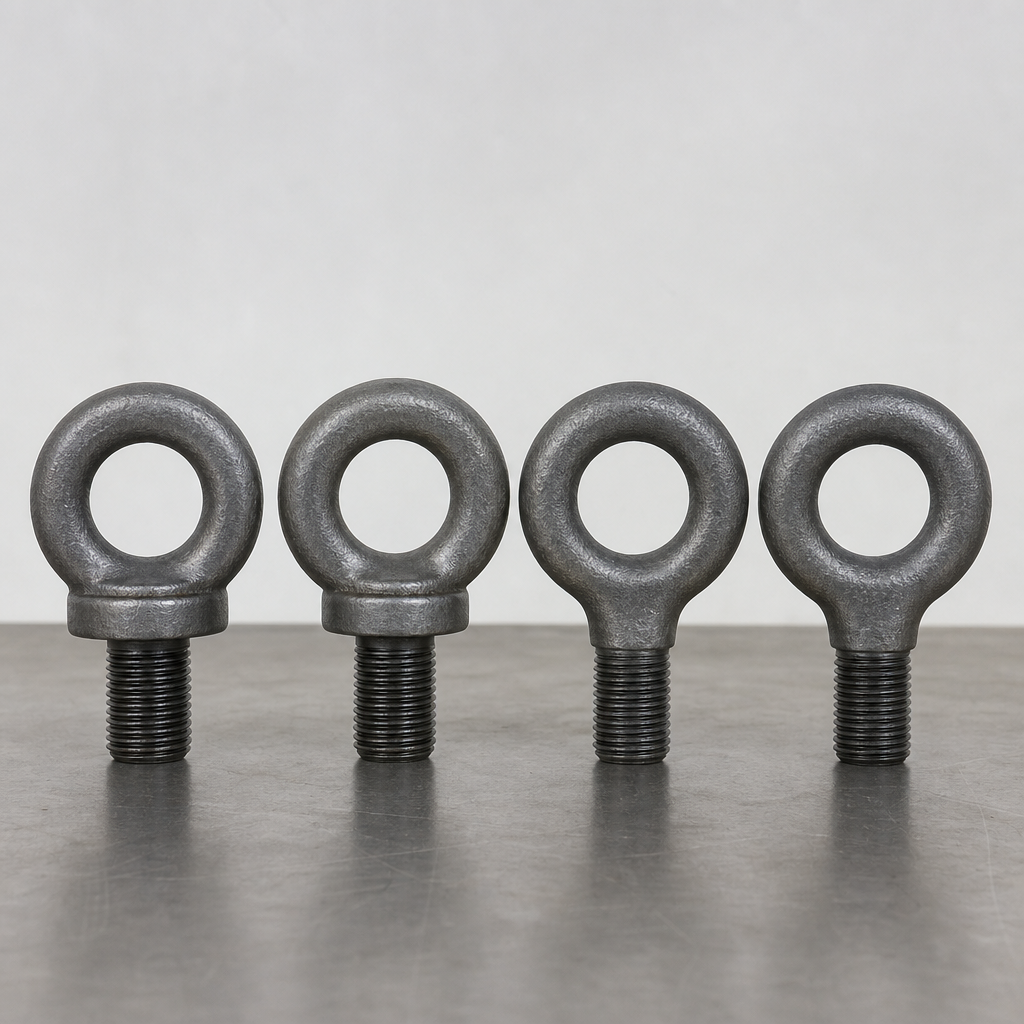
A lifting eyebolt is a forged bolt with an integral ring, screwed directly into a tapped hole in the load and used as a single lifting point or as one leg of a multi-leg arrangement. The collared type has a flanged shoulder that seats fully against the load surface and is manufactured to take a defined amount of side load in addition to straight pull, within the manufacturer’s rated angle. The plain (uncollared) type has no shoulder and is intended for vertical, in-line pull only — any angle on a plain eyebolt introduces bending stress the shank was never designed for.
Both types are common in machinery, gearboxes, motors, moulds and fabricated steelwork across Norwegian industry, usually supplied by the equipment manufacturer with the item.
Identification: forged eyebolts intended for lifting are marked with the manufacturer’s mark, thread size and, on many products, a working load limit stamped or cast into the eye or collar. An unmarked ring bolt found loose in a toolbox should be treated as unidentified and not used for lifting until its origin and rating are confirmed.
What makes one unsafe:
- Not screwed down fully so the collar/shoulder seats hard against the surface — a gap under the collar concentrates load on the first few threads
- Wrong thread engagement length, worn or damaged threads, or a tapped hole that is not deep enough
- A plain eyebolt loaded at any angle away from the bolt axis
- A collared eyebolt loaded beyond its manufacturer’s stated angle limit
- Corrosion, deformation of the eye, cracks, or a bent shank
Before use: confirm the bolt is the correct type and size for the tapped hole, screw it down fully by hand and then with a bar if allowed by the manufacturer, check the load direction against the marked or documented angle limit, and inspect the eye and collar for damage or corrosion. The working load limit is always as marked on the component — never estimated from size alone.
Standarder: DIN 580 (metric lifting eye bolts)