
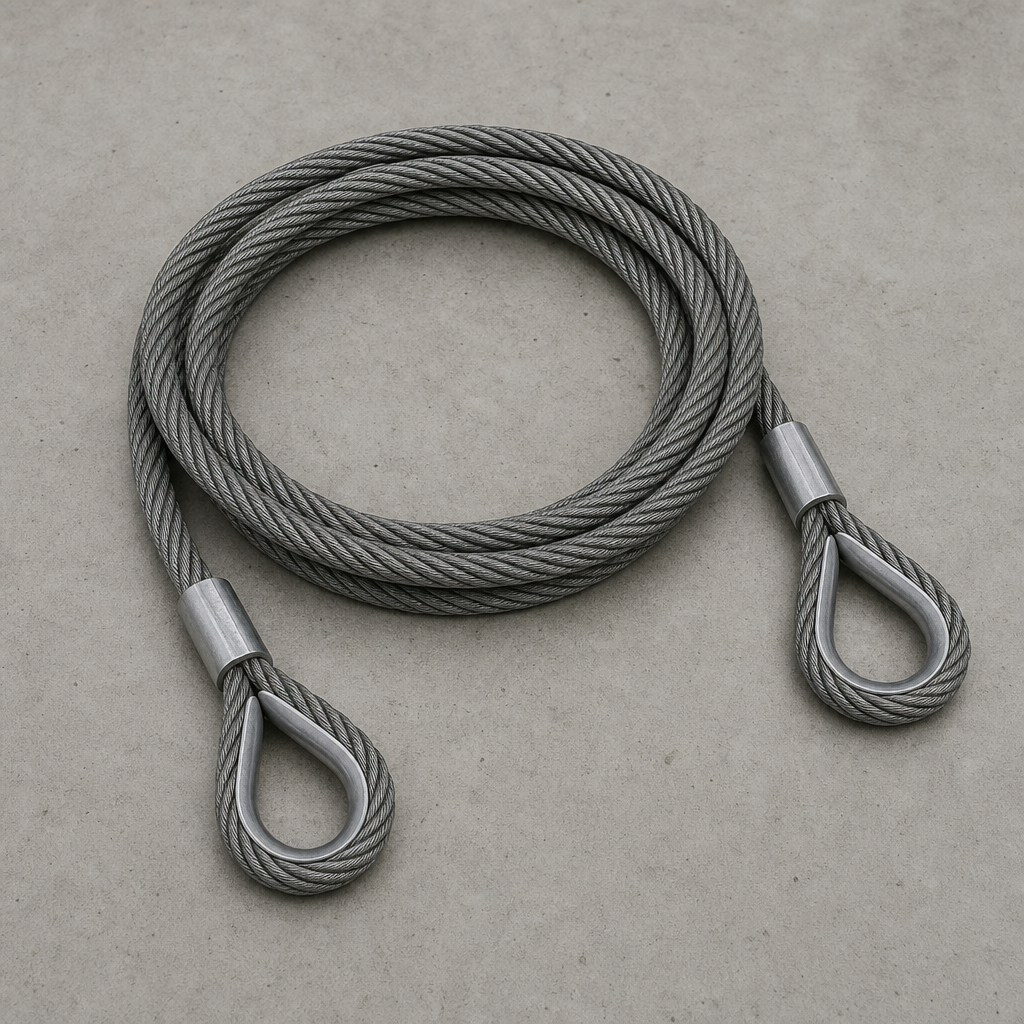
A wire rope sling is a flexible steel lifting accessory formed from a length of stranded wire rope with a termination — typically a hand-spliced eye, a pressed ferrule (swaged eye), or a thimble-and-ferrule eye — at each end. Single-leg slings are used directly on a hook or shackle, often choked around a load or used in combination with other legs for multi-leg lifts. Their main advantage over webbing or chain is resistance to abrasion, sharp edges, and moderate heat, which makes them common in steel fabrication, scrapyards, and general heavy lifting.
Every sling must carry a durable tag or ferrule stamp showing its Working Load Limit (WLL), the mode it applies to (straight pull, choked, basket), diameter, and often a manufacturer identifier and certificate reference. The WLL is mode- and angle-dependent — choked and angled configurations reduce capacity — so the tag alone does not tell you the safe load for every lift; that requires knowing the rigging geometry.
Before use, check for:
- Broken wires, especially clustered around a termination or thimble — a concentration of breaks there is far more serious than isolated breaks along a straight run
- Corrosion, pitting, or a rope that has lost lubrication and looks dry and rusty
- Kinks, birdcaging (strands separated into a cage shape), core protrusion, or flattened/crushed sections
- Damage to the thimble (deformed or worn thin) or a termination that has slipped or shows exposed wire ends
- Heat damage — discoloration or a rope that has been near welding or cutting operations
Discard criteria for running and sling ropes (number of visible broken wires relative to lay length, diameter reduction, corrosion severity) are defined in the relevant standard and vary by rope construction — do not apply a single rule of thumb across all rope types. Slings must be inspected periodically by a competent person in addition to the pre-use visual check every operator should do.
Standarder: EN 13414-1 (steel wire rope slings — safety, general lifting service); EN 12385 series (steel wire ropes — safety, construction and use); ISO 4309 (cranes — wire ropes — care, maintenance, inspection and discard, for the underlying rope condition assessment)