
The hoist is often the only piece of lifting equipment that does not hang on
the crane, and therefore the one most easily left in a box with nobody looking
at it.
The chain
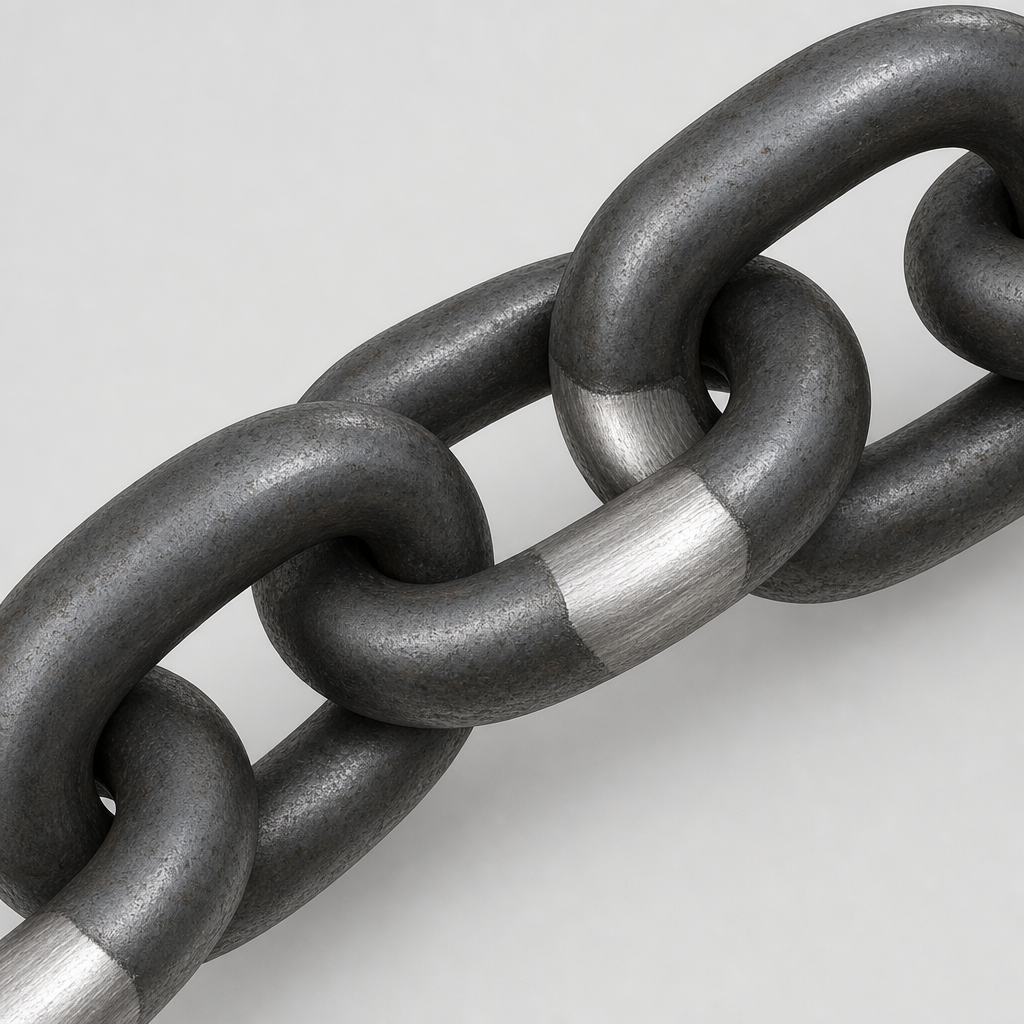
Run the full length through a gloved hand, link by link. Look for:
- Wear where links bear on each other — that is where the material thins
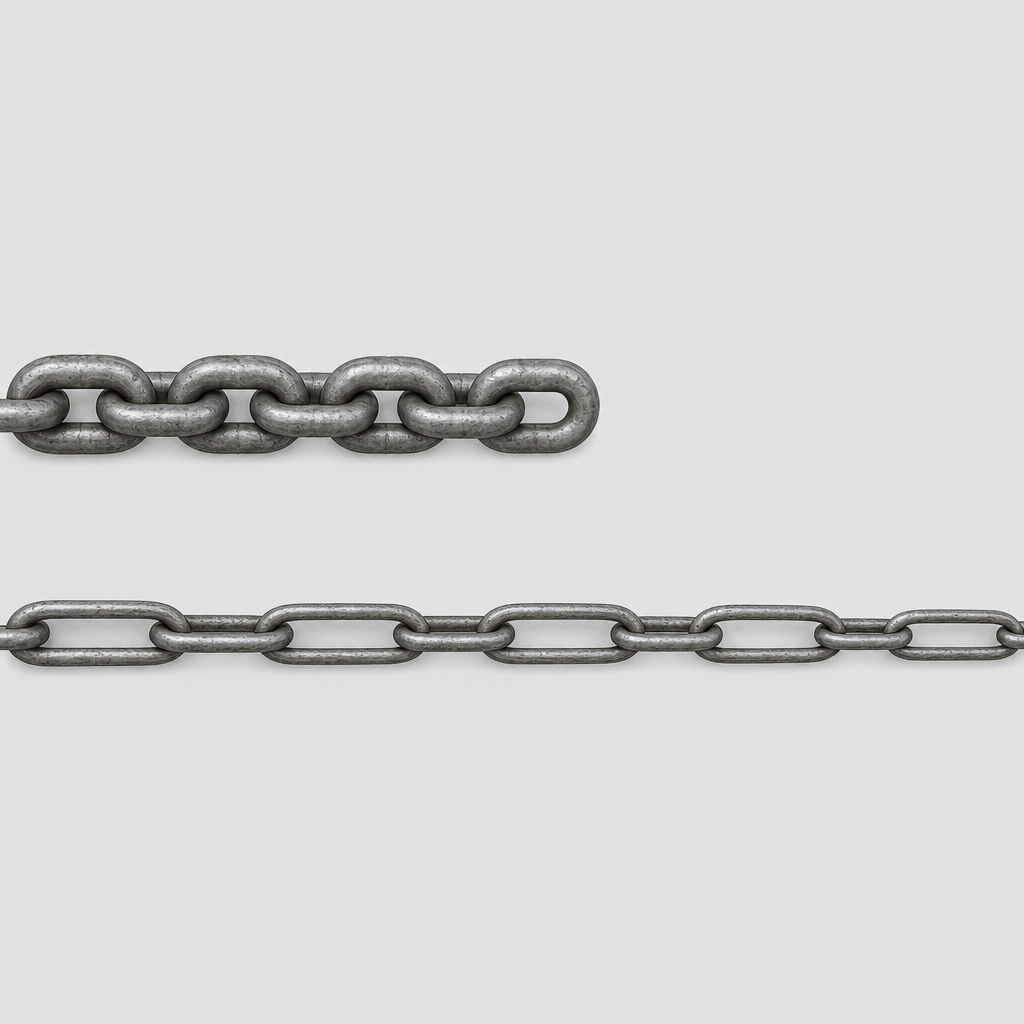
- Stretch. A stretched chain has longer links and looks “slimmer”. Measure
over a fixed number of links and compare with an unused section and you
will see it - Nicks, gouges, weld spatter and cuts
- Bent, twisted or opened links
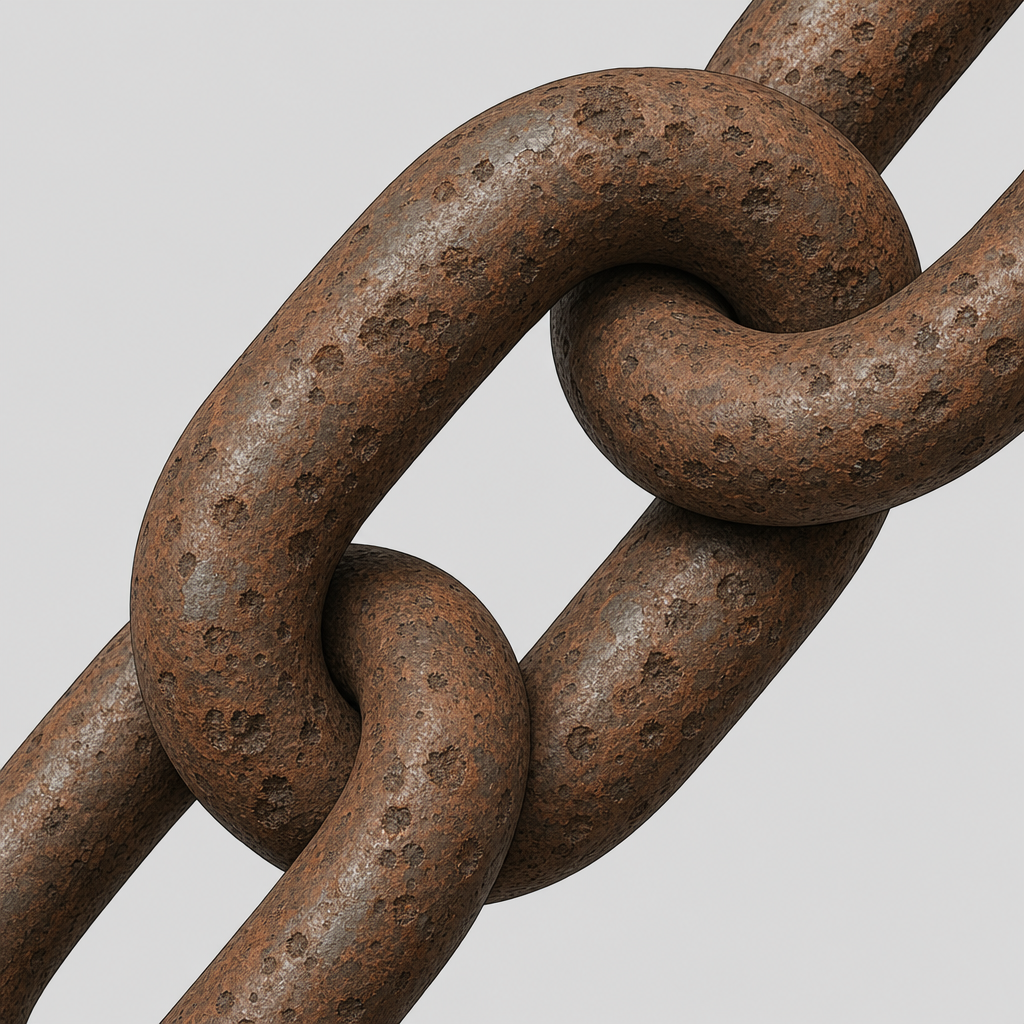
- Rust and pitting, especially on equipment stored outdoors
- That the chain is not twisted, and that the load chain has not been knotted
The brake
The brake is what makes a hoist a hoist. Lift a small load a few centimetres
and release: the load must hold. If it creeps, the hoist comes out of service —
it is not something you adjust yourself on site.
Hook and body
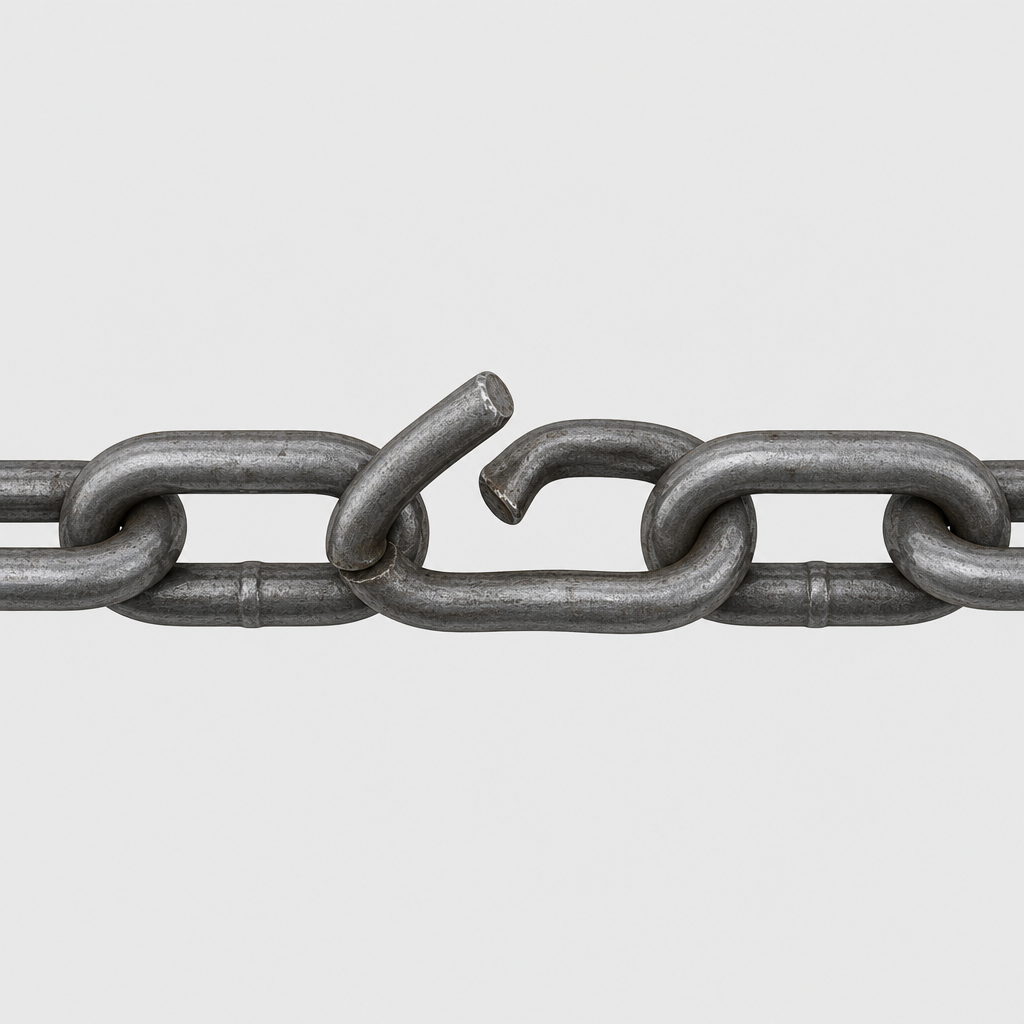
Hooks at both ends are checked as described under
hooks — safety catch, throat opening,
cracks, twist. Look at the body too: cracks, impact damage, missing bolts,
deformed side plates, and whether the WLL marking is still legible.
The mistake people make
Extending the hand chain, putting a bar on the handle, or getting a second
person on it to bring the load up. If it will not come up by hand, it is too
heavy — or something is fouled. Extra force solves neither, but it does wreck
the hoist.
The same applies to using the load chain as a sling around the load, or
loading the hook tip rather than the saddle.
Marking and documentation
The WLL must be legible on the equipment, and the hoist must have valid
documentation. Without marking you do not know what it will take, and it does
not get used. See the
lifting gear reference.
No thresholds here — by design. Discard criteria, torque values, lubricant types and intervals are specific to your machine and your equipment. They are in the manufacturer's documentation, on the equipment certificate, and in the report from sakkyndig kontroll. This page tells you what to look at and what a fault looks like — it does not tell you when something is condemned. If a check leaves you unsure, the equipment stays out of use until someone competent has seen it.