
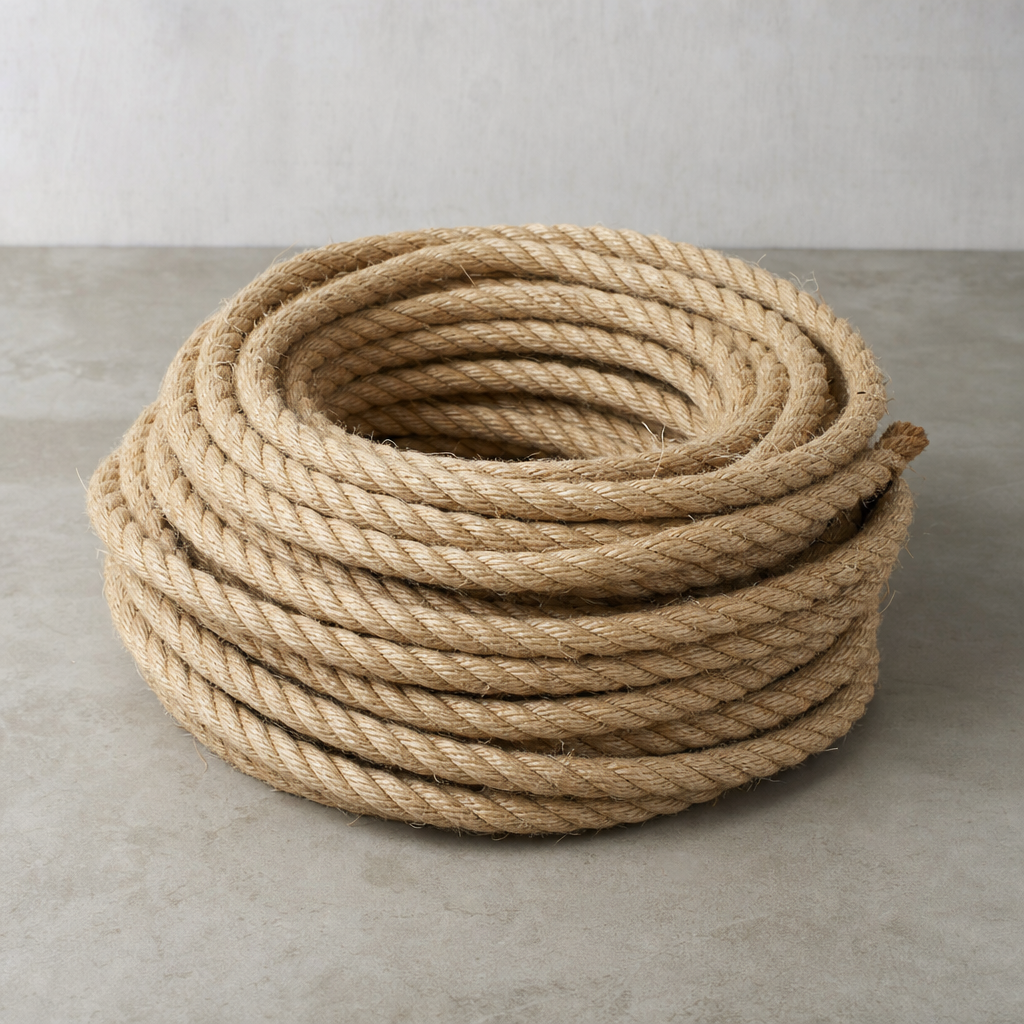
Natural fibre ropes — manila, sisal, hemp, and similar plant-based cordage — were the standard rigging and lifting rope before synthetic fibres became dominant. They are still occasionally found in service on older equipment, in maritime or heritage contexts, or used for genuinely non-critical purposes such as fencing, decoration, or light hand-lines. For anything load-bearing on a modern crane or lifting operation, natural fibre rope has been almost entirely displaced by synthetic rope (polyester, nylon, HMPE) and steel wire rope, because plant fibre is weaker per unit weight, absorbs and retains water (adding weight and promoting rot), and degrades with age even in storage.
If natural fibre rope is encountered in a working lifting context at all, it should be treated with more suspicion than synthetic rope of similar apparent condition, because its failure modes are less visible and its strength was never as consistent as later synthetic constructions.
What makes natural fibre rope unsafe:
- Any smell of mildew, mustiness, or visible mould — a strong indicator of rot that severely weakens the fibres from the inside out
- Dry, brittle, or discoloured fibres, or fibres that break easily when picked at by hand
- Stiffness after wetting and drying cycles, which accelerates fibre breakdown
- Visible fraying, cut strands, or a rope that has clearly been used hard without any documented inspection history
- Age and unknown provenance — natural fibre rope with no traceable history or rated WLL should not be trusted for any load-bearing lift
In practice, the correct action for most natural fibre rope found on a modern job is to retire it from anything load-bearing and replace it with a certified synthetic or steel alternative; it should not be pressed into service as a lifting sling without a rated, tagged, purpose-built product.