
Ice is three problems at once: it weighs, it removes grip, and it falls on
somebody.
Ice that falls
This is the serious one. Ice shedding from the jib, ties or tower at height
lands with enough force to kill — and it does not let go when it is coldest, but
when it thaws or the sun reaches the steel. The danger peaks precisely when the
weather appears to be improving.
So: cordon off beneath the crane when conditions call for de-icing, keep
people clear while ice can release, and consider whether work under the crane
should be happening at all. See the article Dropped objects.
Ice that weighs
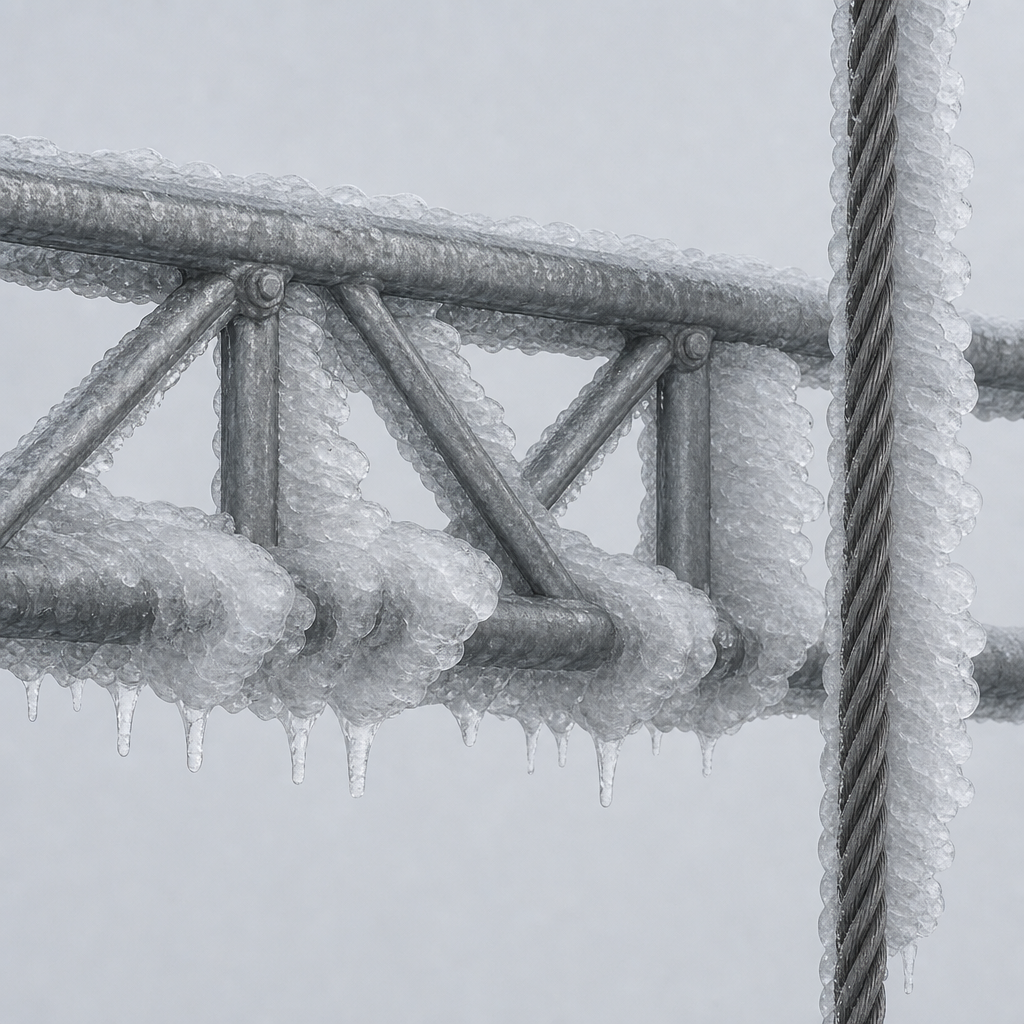
Rime and icing build over the whole structure and on the load. A panel with
ice on it weighs more than the panel, and it catches wind like a sail. No load
is “the same load” with ice on it. See wind.
Ice that removes grip
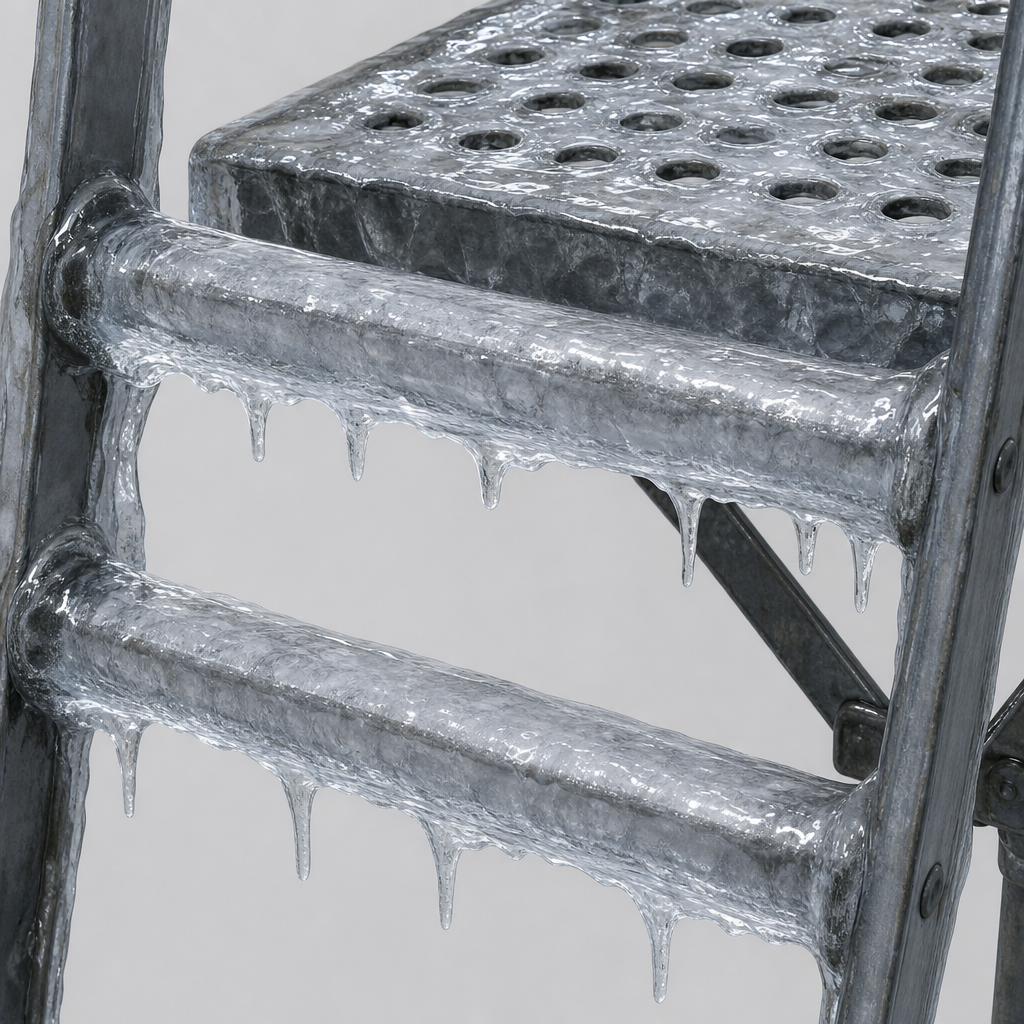
The ladder, rest platforms and walkways are where people fall — not in the
lift itself. Ice and grease together are particularly treacherous, because the
surface just looks wet. See
lubrication.
How ice is removed
The order matters:
- Secure the area below first. Everything else comes after
- Secure yourself. De-icing happens at height, on a slippery
surface, often in wind. Fall protection belongs here - Use what the machine tolerates. Heat, steam or brushing
according to what the manual permits. Striking the structure to shake ice
loose damages steel and bolts - Do not use salt or chemicals unless the manufacturer says
it is acceptable — many cause corrosion on wire rope and electrical equipment - Check what was under the ice. Limit switches, the
anemometer, lights and warning equipment may have frozen up or been damaged
After de-icing
Run the motions gently before the first lift. Brakes, rope and sheaves can
behave differently cold and wet, and something may still be frozen even though
it looks free.
See also the article Ice, snow and cold steel.
No thresholds here — by design. Discard criteria, torque values, lubricant types and intervals are specific to your machine and your equipment. They are in the manufacturer's documentation, on the equipment certificate, and in the report from sakkyndig kontroll. This page tells you what to look at and what a fault looks like — it does not tell you when something is condemned. If a check leaves you unsure, the equipment stays out of use until someone competent has seen it.