
Lubrication is the part of maintenance easiest to put off, and the part that
tells you most clearly when it has been put off too long.
Which grease, where and how often
It is in the crane’s manual. Not in this text, and not on the drum that
happens to be in the container. The wrong lubricant can be worse than too
little — some greases are incompatible and form a mass that holds water in
rather than keeping it out.
Note in particular that intervals are often shorter in a coastal climate, at
low temperatures or under intensive use.
Typical lubrication points
- Slew ring gear teeth and bearing
- Sheaves, blocks and the hook block bearing
- Trolley wheels and rails
- Wire rope — where the documentation requires it, with the product it specifies
- Pins and joints in climbing equipment
- Gearboxes and hydraulics: level, not just quantity
Lubrication is also an inspection
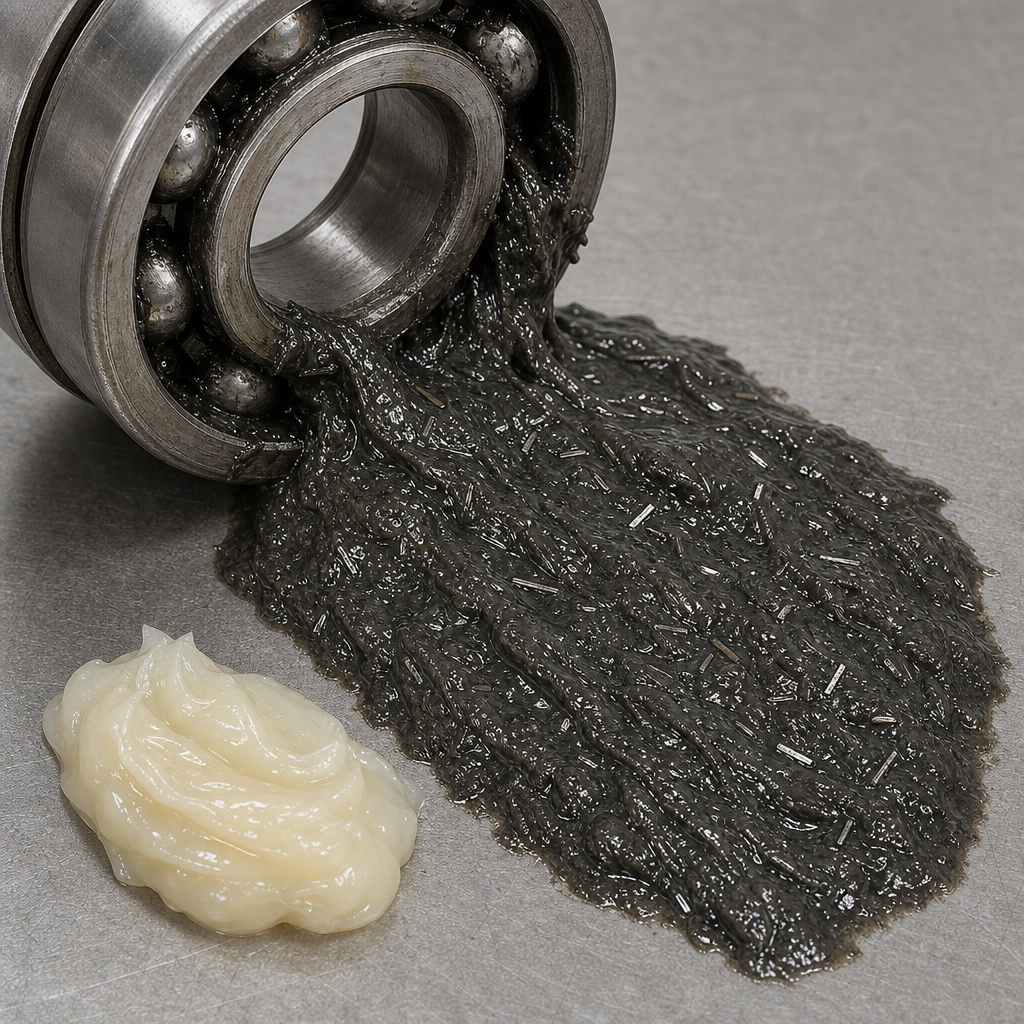
This is the part people miss. When you grease, you are close to components you
otherwise never look at:
- Old grease coming out with metal particles in it means wear inside
- Grease that is discoloured or smells burnt means it has been running hot
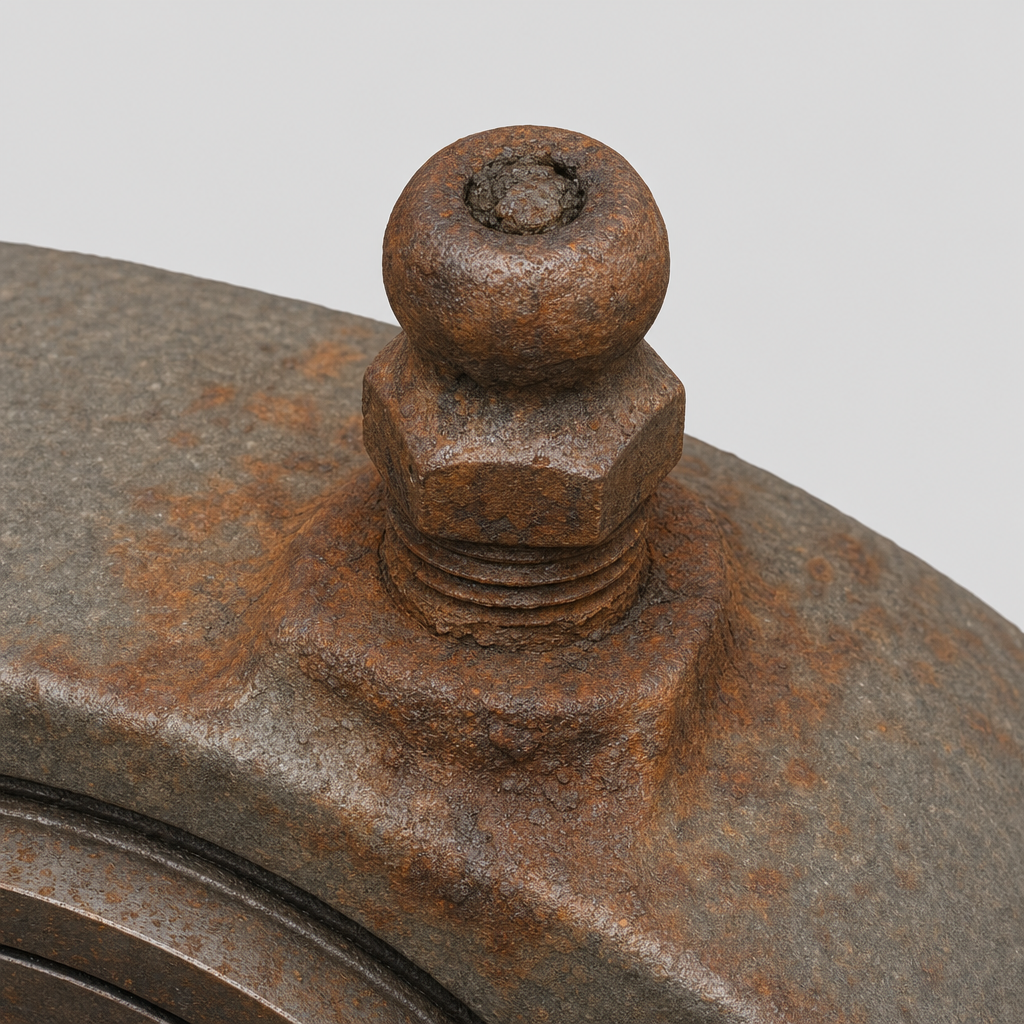
- A nipple that will not take grease means a blocked passage — the point is
not being lubricated even though you are standing there with the gun - Water in the grease means a seal has gone
- Grease disappearing far faster than before means it is escaping somewhere
Write down what you see. A greasing round with no findings is also a finding.
Housekeeping
Excess grease on walkways, ladder rungs and rest platforms is a fall risk.
Wipe it up. See snow and ice —
grease and ice together are worse than either alone.
No thresholds here — by design. Discard criteria, torque values, lubricant types and intervals are specific to your machine and your equipment. They are in the manufacturer's documentation, on the equipment certificate, and in the report from sakkyndig kontroll. This page tells you what to look at and what a fault looks like — it does not tell you when something is condemned. If a check leaves you unsure, the equipment stays out of use until someone competent has seen it.