Chain sling inspection and discard

Chain sling inspection and discard — løfteredskap

Chain slings need both a quick visual check before every lift and a documented periodic inspection by a competent body. Knowing what kind of damage to look for — rather than a fixed wear percentage — is what keeps an operator from putting a compromised sling into service.

Flat webbing sling (flat woven)

Flat webbing sling (flat woven) — løfteredskap

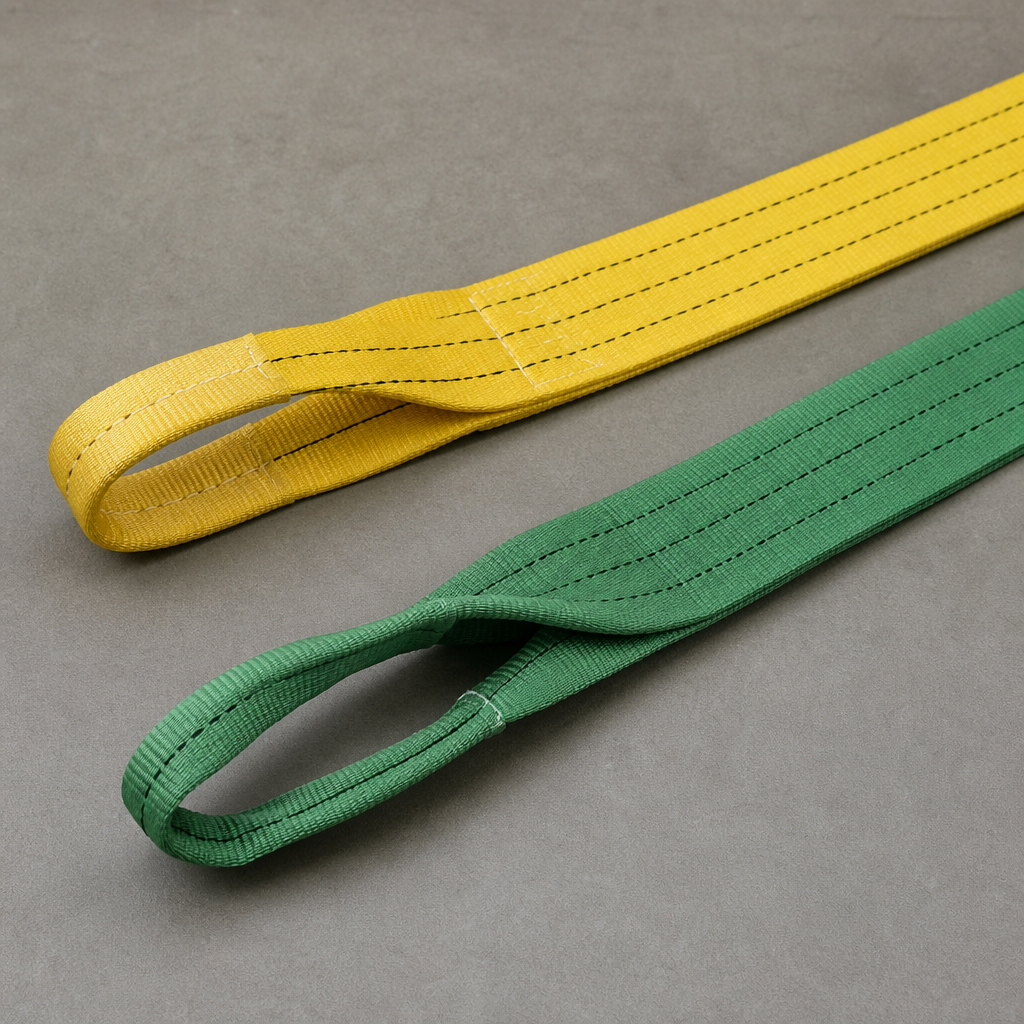
A flat webbing sling is a load-bearing band of woven synthetic fibre, usually polyester, finished with reinforced loop eyes at each end. It is one of the most common lifting accessories on a crane site because it is light, flexible, and gentle on the load surface compared with chain or wire rope.

Lifting beam vs. spreader beam

Lifting beam vs. spreader beam — løfteredskap

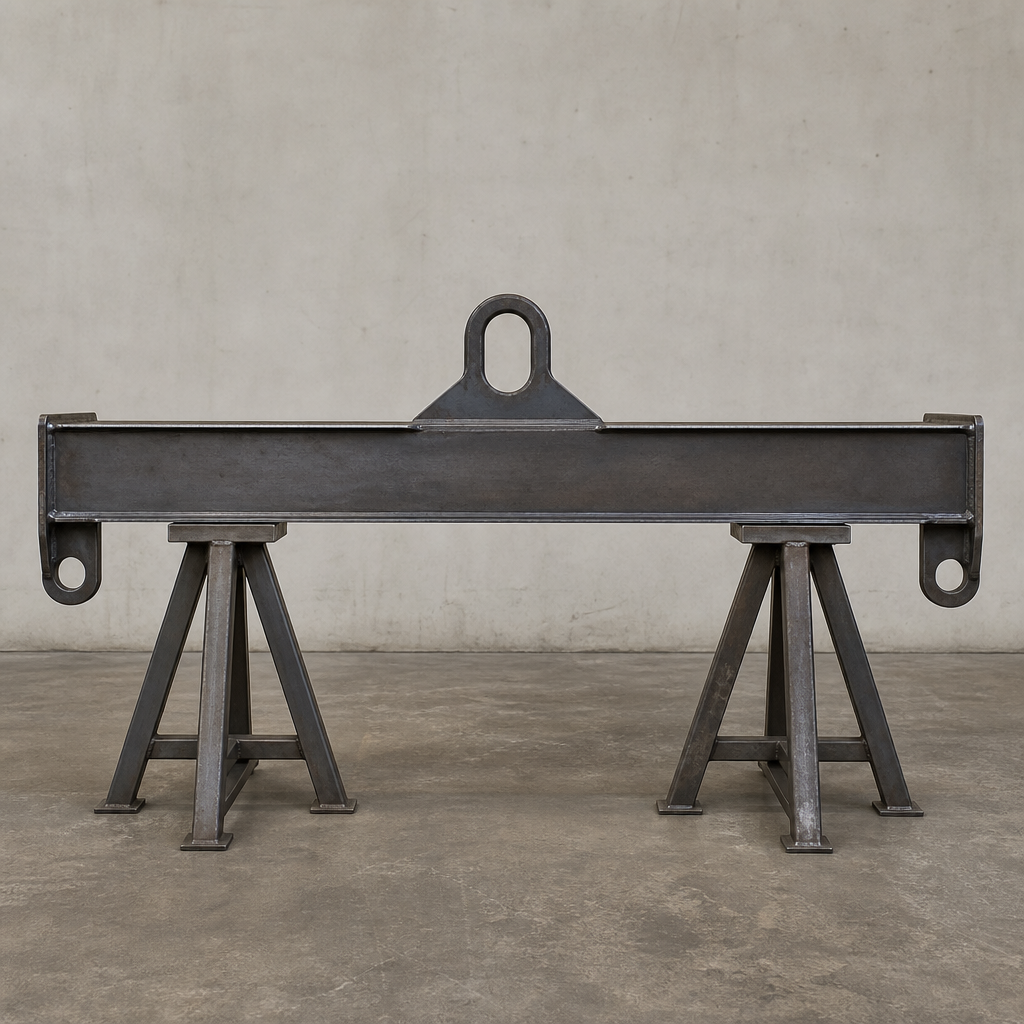
A lifting beam has a single top attachment point and carries the load in bending, while a spreader beam is suspended from two separate slings and is loaded mainly in compression. The two are frequently confused, but choosing the wrong one for a given load geometry changes how the beam — and the slings under it — actually behave under load.

Webbing sling eye types and end fittings

Webbing sling eye types and end fittings — løfteredskap

Flat webbing slings are produced with different eye configurations — standard soft eyes, twisted (reverse) eyes, and endless loop constructions — each suited to particular hitch methods and connection points. Choosing the wrong eye type or connecting it incorrectly to a hook or shackle can concentrate load on a small area of webbing and reduce real capacity below the marked WLL.

Adjustable and telescopic lifting beams

Adjustable and telescopic lifting beams — løfteredskap

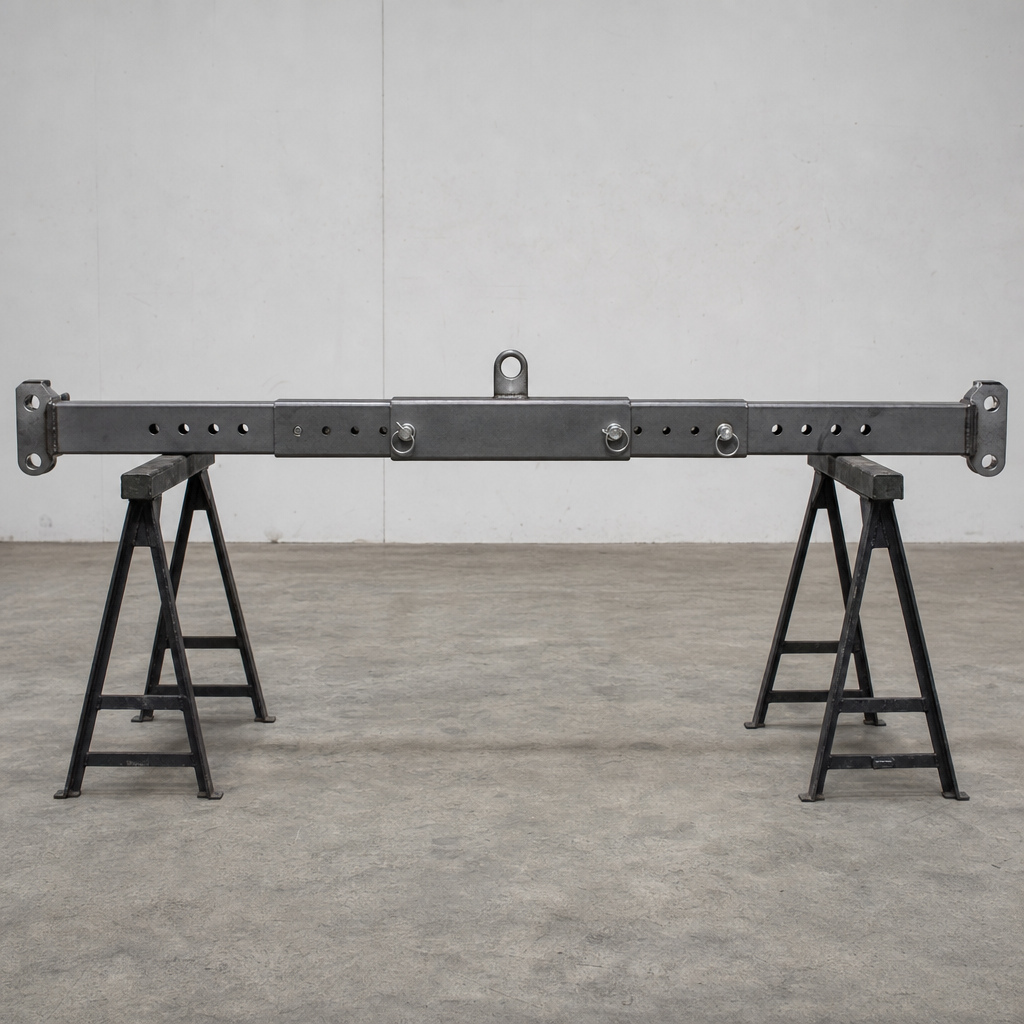
Adjustable lifting beams let the lifting points slide or telescope to match different load lengths, but each position usually carries its own separate working load limit rather than one figure for the whole beam. Misreading which position is set — or moving a beam under load — is the main safety issue specific to this type.

Webbing sling protection against edges and abrasion

Webbing sling protection against edges and abrasion — løfteredskap

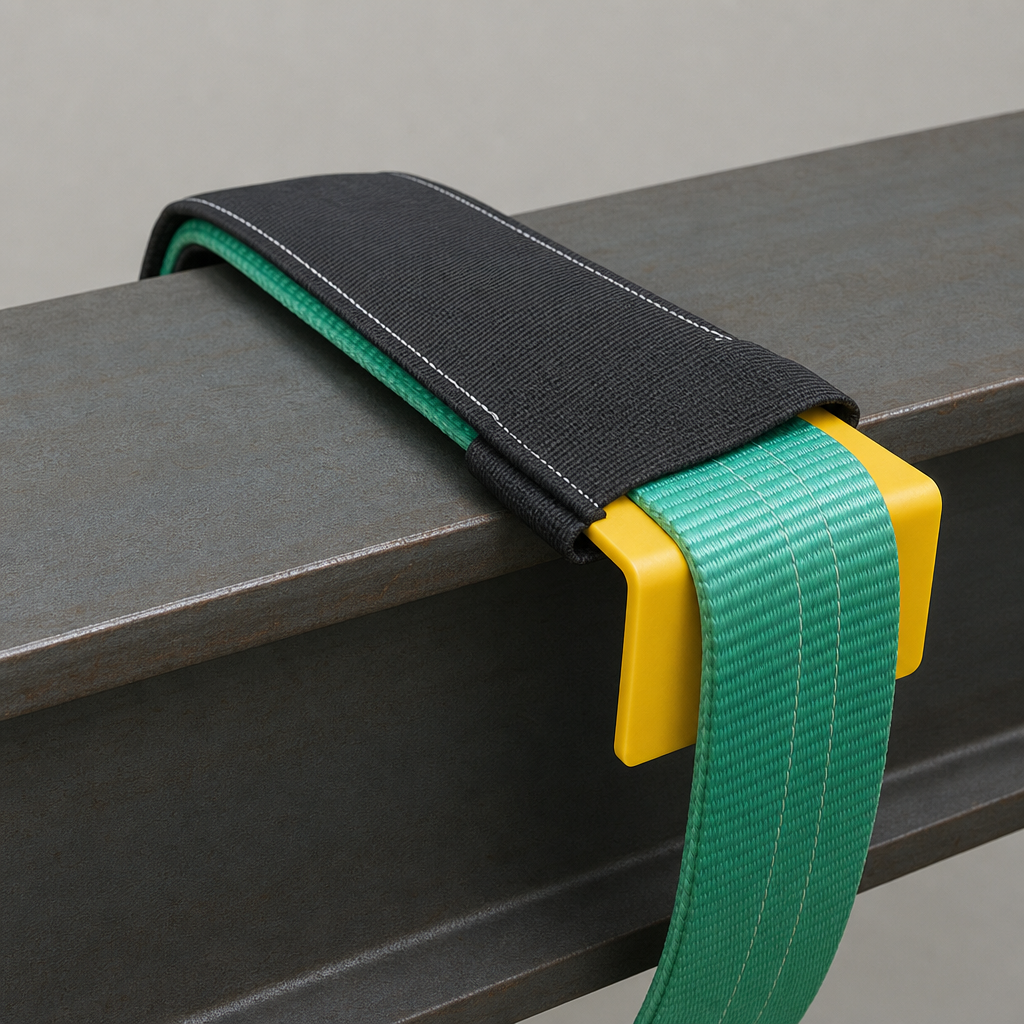
Sharp or unprotected edges on a load are one of the most common causes of sudden webbing sling failure, because textile fibres can be cut through quickly under tension where a sling passes over a corner. Protective sleeves, edge protectors and corner pads reduce this risk and should be treated as standard equipment, not an optional extra.

Vacuum and magnet lifting beams

Vacuum and magnet lifting beams — løfteredskap

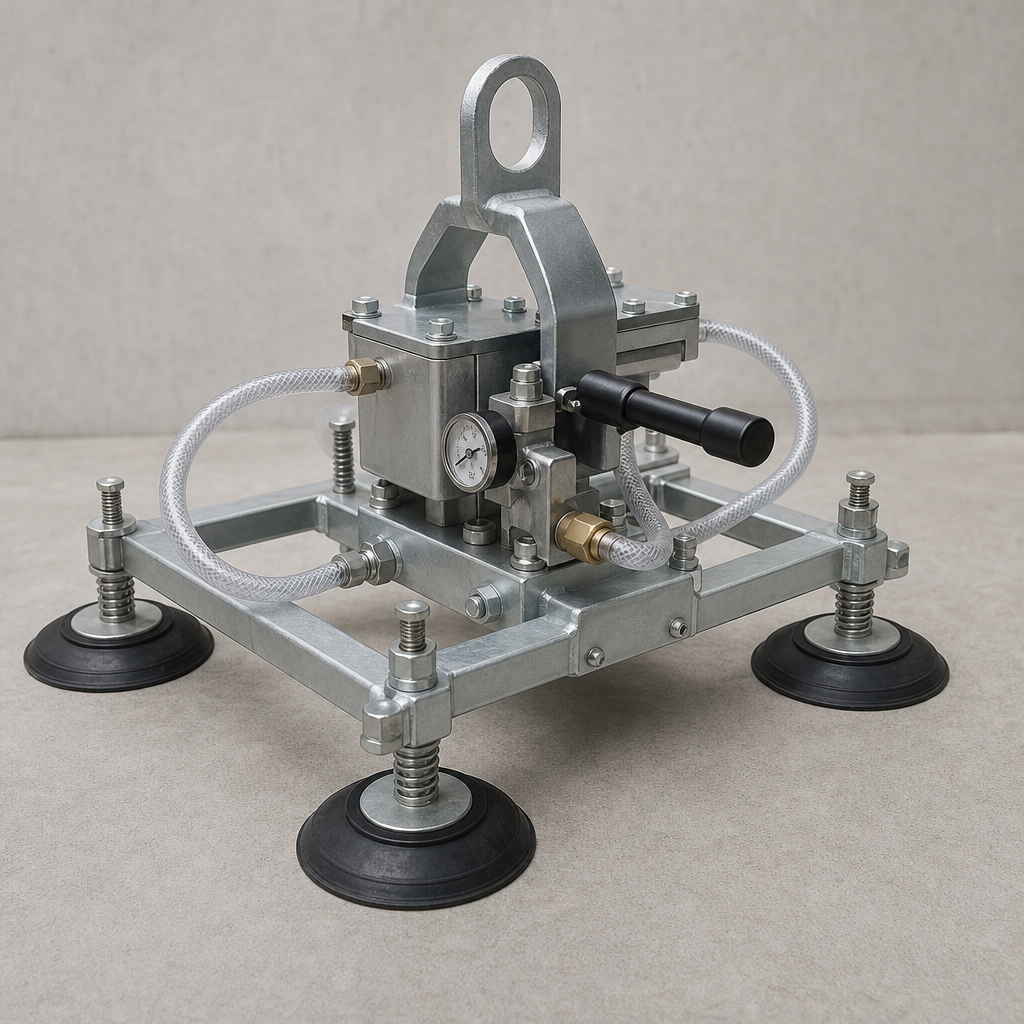
Vacuum and magnetic lifters use suction pads or electromagnets instead of slings to grip flat, non-porous or ferrous loads directly, and depend entirely on an unbroken seal or power supply rather than a mechanical connection. Their unique failure mode — silent, sudden release — makes pre-use checks and power backup arrangements especially important.

Round sling — endless polyester construction

Round sling — endless polyester construction — løfteredskap

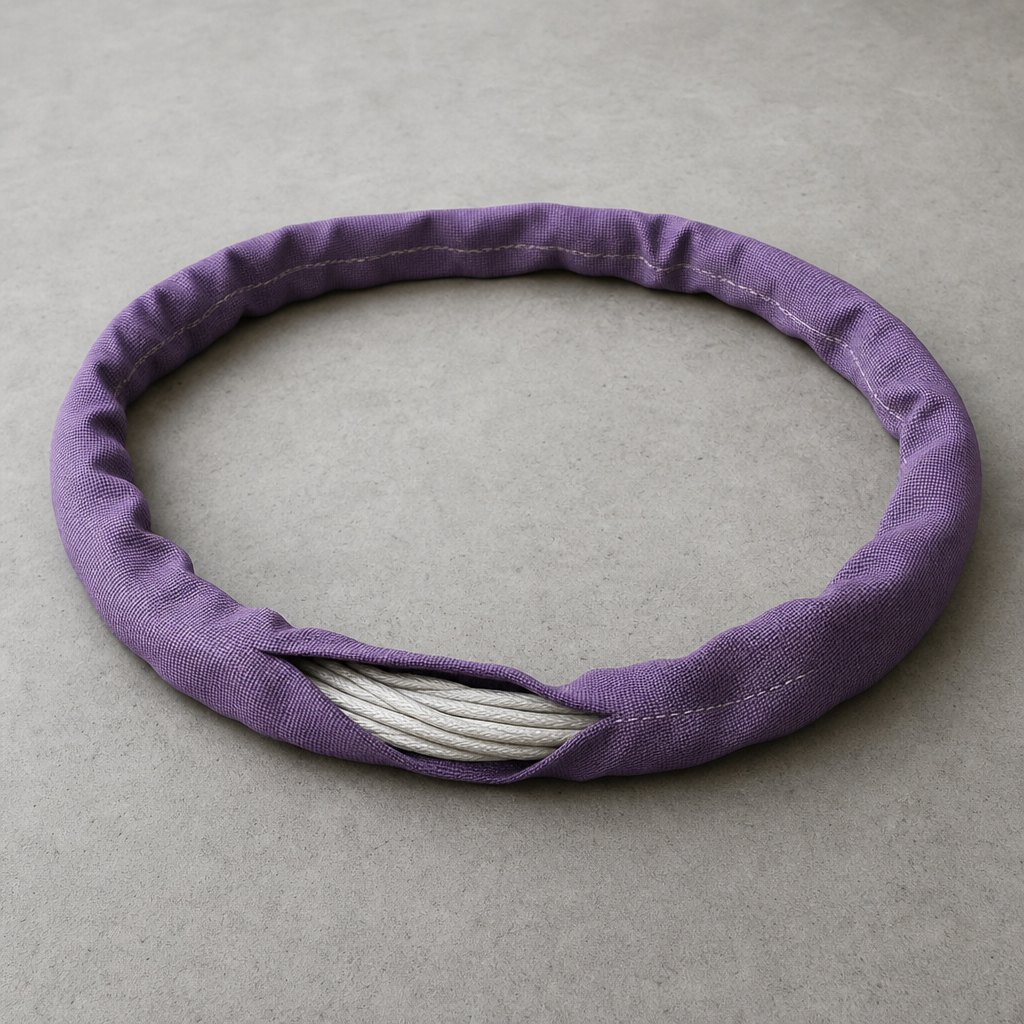
A round sling is an endless loop of polyester yarn bundled inside a protective woven outer sleeve, giving it no fixed load-bearing surface — the sling simply rotates in use, spreading wear evenly. This makes it a popular general-purpose lifting accessory, but the outer sleeve hides the load-bearing core, which makes correct inspection especially important.

Lifting eyebolts — collared vs plain (DIN 580)

Lifting eyebolts — collared vs plain (DIN 580) — løfteredskap

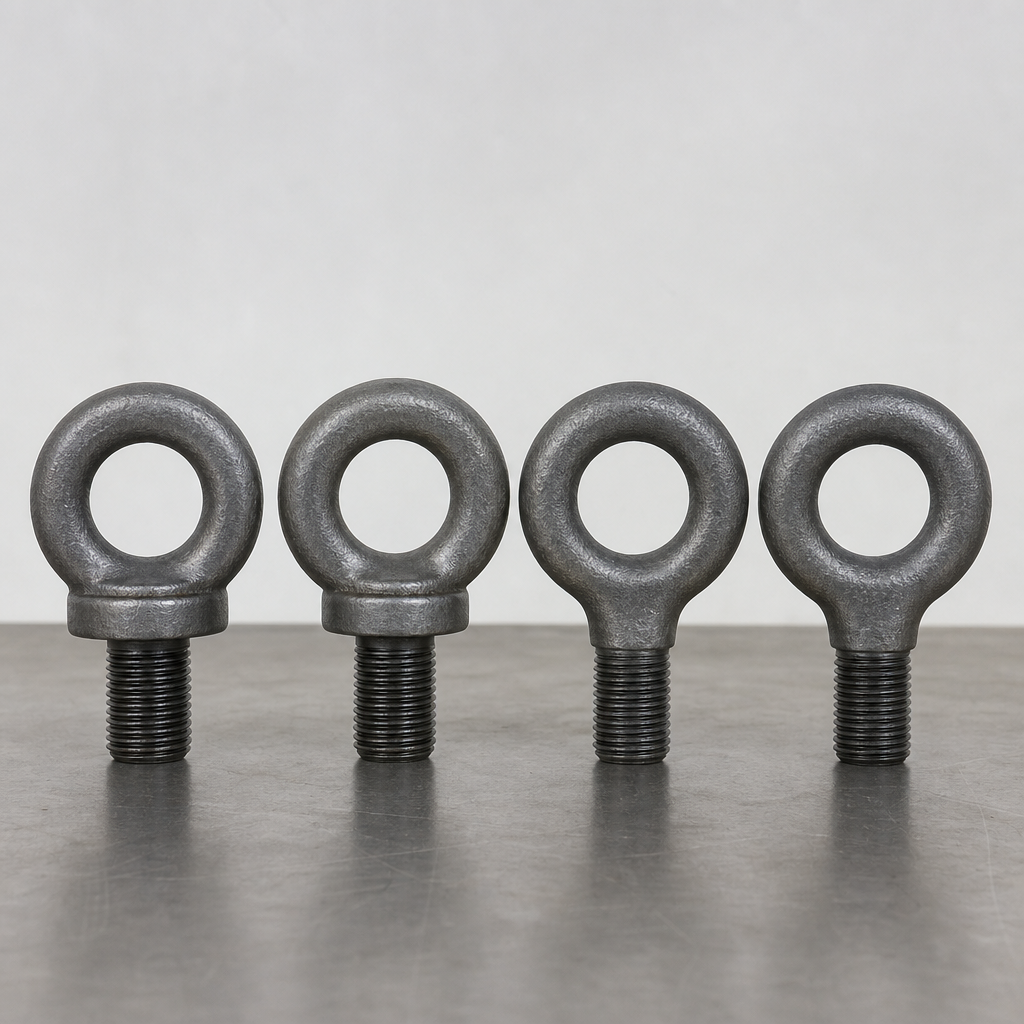
Collared eyebolts have a shouldered ring at the base that lets them carry a limited amount of angular load, while plain (uncollared) eyebolts are designed for straight vertical pull only. Mixing the two up, or fitting either type loosely, is one of the most common rigging mistakes on site.

Round sling hitch configurations: straight, choke, basket

Round sling hitch configurations: straight, choke, basket — løfteredskap

A round sling’s rated capacity changes depending on whether it is rigged straight (vertical), choked around the load, or as a basket hitch around the load and back to the hook. The label states the WLL for each configuration, and choosing the wrong one for the geometry of the lift is a common rigging error.